

The global skincare industry has seen growing interest in Korean and Japanese beauty products, with both gaining popularity among people looking for effective ways to care for their skin. Korean skincare, commonly known as K-beauty, is often associated with innovative formulations, hydration and multi-step routines. Japanese skincare, or J-beauty, is widely appreciated for its simplicity, consistency and focus on maintaining healthy-looking skin. Although both approaches share similar goals, their philosophies, products and routines can differ. Understanding these differences can help you make more informed skincare choices. Whether you prefer a detailed routine or a simpler approach, both Korean and Japanese skincare offer plenty of options worth exploring.
1. What Is Korean Skincare (K-Beauty)?
Korean skincare, popularly known as K-beauty, focuses on maintaining healthy-looking skin through hydration, consistent care and products designed to address different skin concerns. Rather than relying on a single product, the approach often involves using multiple lightweight formulations that work together as part of a skincare routine.
K-beauty has gained international attention for its innovative product textures, ingredient combinations and emphasis on skin barrier care. Products such as essences, ampoules, sheet masks and lightweight serums are commonly associated with Korean beauty routines.
Another important aspect of Korean skincare is personalization. Instead of following a fixed routine, individuals can choose products according to their skin type, concerns and preferences.
Key Characteristics of Korean Skincare
- Hydration-focused formulations: Toners, essences and serums help add hydration to the routine.
- Layering approach: Multiple lightweight products can be applied in a particular order.
- Ingredient innovation: Ingredients such as centella asiatica, snail mucin and heartleaf are popular in K-beauty formulations.
- Skin barrier care: Many products focus on supporting the skin’s moisture barrier.
- Personalized routines: Products can be selected according to individual skin needs.
2. What Is Japanese Skincare (J-Beauty)?
Japanese skincare, also known as J-beauty, is commonly associated with simplicity, consistency and a balanced approach to skincare. Rather than emphasizing a large number of products, many Japanese skincare routines focus on a few carefully selected essentials that support everyday skin maintenance.
Cleansing, hydration and sun protection are important parts of this approach. Japanese beauty products are also known for their lightweight lotions, cleansing oils, moisturizers and sunscreens.
Another notable aspect of Japanese skincare is its attention to everyday habits. Maintaining a consistent routine and selecting products that suit individual skin needs are considered important.
Key Characteristics of Japanese Skincare
- Simple routines: Focus on essential products rather than unnecessary steps.
- Consistent skincare habits: Regular cleansing, moisturizing and sun protection.
- Hydration: Japanese lotions and moisturizers help maintain skin moisture.
- Traditional ingredients: Rice bran, green tea and camellia are commonly associated with Japanese beauty products.
- Practical formulations: Many products are designed for convenient everyday use.
3. Korean vs Japanese Skincare: Key Differences
Although Korean and Japanese skincare share a focus on healthy-looking skin, their approaches can differ in terms of product selection, formulation and routine preferences.
Korean skincare is often associated with layering lightweight products to address different skin concerns. Japanese skincare generally emphasizes a more streamlined routine built around essential skincare steps. However, both markets offer products ranging from simple everyday essentials to advanced treatments.
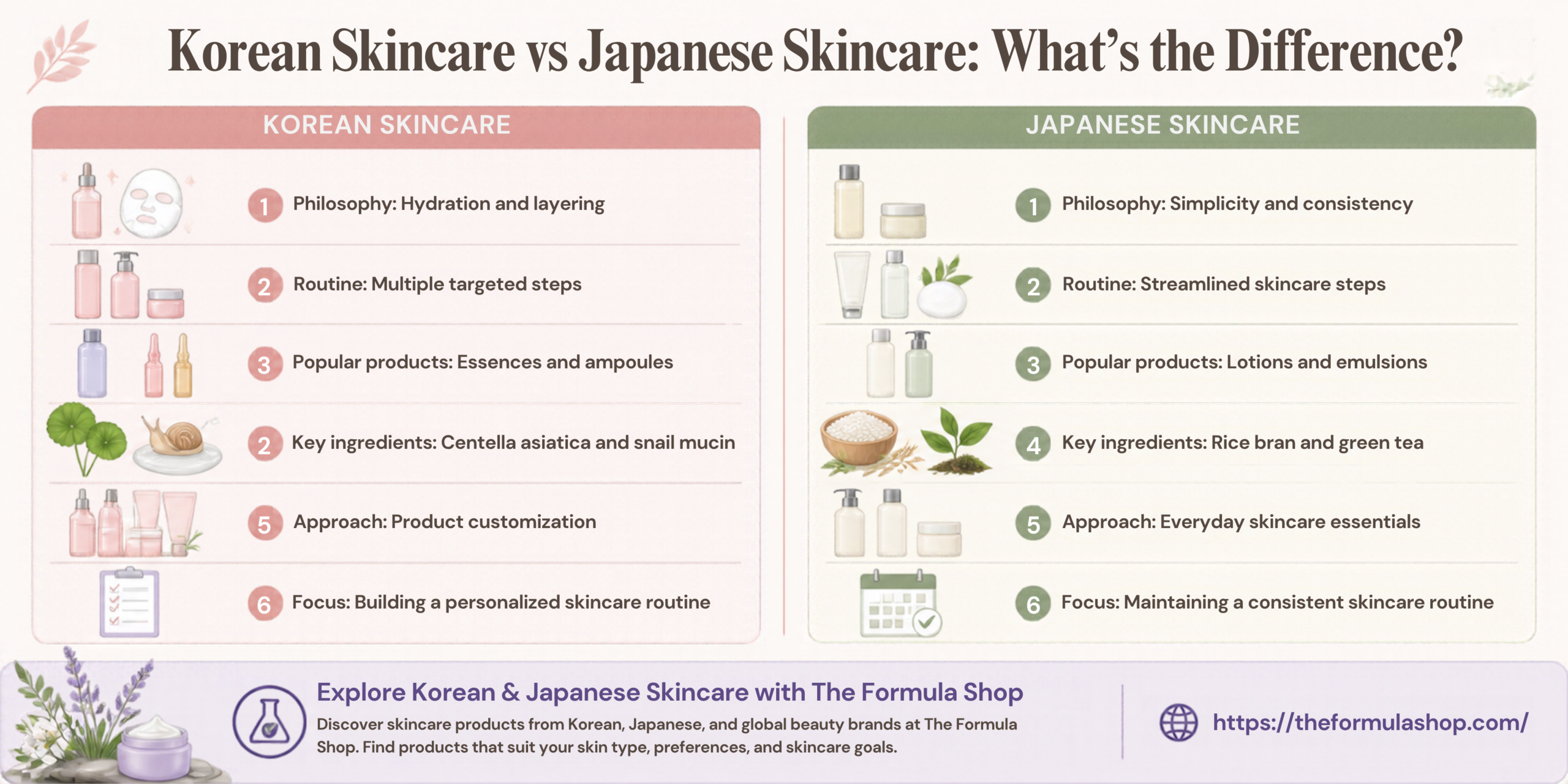
Here is a comparison to help understand the differences between K-beauty and J-beauty.
| Comparison factor | Korean skincare | Japanese skincare |
| Philosophy | Hydration, customization and innovation | Simplicity, consistency and skin maintenance |
| Routine steps | Often involves multiple layers | Often follows a streamlined routine |
| Product textures | Lightweight essences, ampoules and serums | Lotions, emulsions and lightweight moisturizers |
| Popular ingredients | Centella asiatica, snail mucin and heartleaf | Rice bran, green tea and camellia |
| Product approach | Wide variety of targeted formulations | Strong focus on everyday skincare essentials |
| Sun protection | Wide range of sunscreen formulations | Well-known for lightweight sunscreen textures |
One approach is not automatically better than the other. Korean skincare may appeal to people who enjoy exploring different products and layering formulations, while Japanese skincare may suit those who prefer a simpler routine. Ultimately, the right choice depends on your skin type, lifestyle and personal preferences.
4. Popular Ingredients in Korean and Japanese Skincare
Ingredients play an important role in choosing skincare products. Both Korean and Japanese beauty markets use a variety of ingredients to formulate products for hydration, moisturization and different skin concerns.
Popular Korean Skincare Ingredients
Centella Asiatica: Commonly used in skincare formulations designed for sensitive or irritated-feeling skin. It is popular in calming serums and moisturizers.
Snail Mucin: Known for its moisturizing properties, snail mucin is frequently included in Korean essences and serums.
Propolis: A bee-derived ingredient used in some skincare formulations, particularly moisturizing and conditioning products.
Heartleaf: Frequently found in Korean skincare products formulated for skin that needs a gentle routine.
Niacinamide: A form of vitamin B3 that can help improve the appearance of uneven skin tone and support the skin barrier.
Popular Japanese Skincare Ingredients
Rice Bran: Traditionally associated with Japanese beauty practices, rice bran is used in cleansing and moisturizing formulations.
Green Tea: Contains antioxidant compounds and is commonly included in skincare products.
Ceramides: Important components of the skin barrier that help maintain moisture and support barrier function.
Hyaluronic Acid: A well-known humectant that attracts and retains water, helping keep the skin hydrated.
Camellia: Camellia-derived oils are used in certain Japanese beauty products for their conditioning and moisturizing properties.
It is worth remembering that these ingredients are not exclusive to either country. Their suitability depends on the formulation, concentration and individual skin response.
5. Korean vs Japanese Skincare Routines: How Do They Compare?
The main difference between a Korean skincare routine and a Japanese skincare routine is often the number of products and the way they are incorporated into daily care. Both approaches can be adjusted according to individual needs.
Example Korean Skincare Routine
A typical Korean-inspired routine may include:
- Oil cleanser: Helps remove sunscreen and makeup.
- Water-based cleanser: Cleanses remaining impurities.
- Toner: Adds hydration and prepares the skin for subsequent products.
- Essence: Provides an additional layer of lightweight hydration.
- Serum: Targets specific concerns such as uneven skin tone or dryness.
- Moisturizer: Helps maintain skin hydration.
- Sunscreen: Protects the skin from UV exposure during the day.
Example Japanese Skincare Routine
A simple Japanese-inspired routine may include:
- Cleansing oil: Removes makeup and sunscreen when needed.
- Facial cleanser: Cleanses the skin.
- Lotion: Adds hydration and supports the next skincare steps.
- Serum: Addresses specific skincare concerns if needed.
- Moisturizer: Helps retain moisture.
- Sunscreen: Provides daytime UV protection.
These routines are examples rather than strict rules. You do not need to use every product to maintain healthy-looking skin.
6. Which Is Better for Your Skin Type?
Choosing between Korean and Japanese skincare should depend more on your skin type and individual concerns than on where a product is manufactured. Both markets offer a variety of formulations suitable for different skincare needs.
For Dry Skin
People with dry skin may benefit from hydrating toners, moisturizing serums and barrier-supporting creams. Korean essences and Japanese moisturizing lotions can both be useful additions, depending on their formulations.
For Oily and Acne-Prone Skin
Lightweight, non-comedogenic formulations may be preferable for people with oily or acne-prone skin. Gel moisturizers and lightweight serums are options worth considering in both Korean and Japanese skincare ranges.
For Sensitive Skin
Look for gentle formulations with minimal potential irritants. Products containing ingredients such as centella asiatica or ceramides may be worth exploring. Always check the complete ingredient list and patch-test new products.
For Combination Skin
Combination skin may require different levels of hydration across the face. Lightweight toners, targeted serums and balanced moisturizers can help create a routine without excessive layering.
7. Can You Combine Korean and Japanese Skincare Products?
Yes, Korean and Japanese skincare products can be combined in the same routine. There is no need to follow only one country’s skincare approach. What matters most is whether the products complement your skin’s needs and work well together.
For example, you could use a Korean hydrating toner alongside a Japanese moisturizer and sunscreen. The combination can provide a practical routine without requiring products from a single beauty market.
However, introduce new products gradually, especially when using active ingredients. Avoid adding several unfamiliar products at once, and pay attention to how your skin responds. A well-planned routine is more useful than simply using more products.
8. Where Can You Explore Korean and Japanese Skincare Products?
Exploring skincare products from different beauty markets can help you understand the available formulations, ingredients and product options. The Formula Shop is an online beauty and skincare destination where consumers can discover products from Korean, Japanese, Indian and other global beauty markets. Whether you are interested in exploring K-beauty essentials or learning more about J-beauty products, you can visit The Formula Shop to browse its skincare collections and discover options for your routine.
9. Frequently Asked Questions
1. Is Korean skincare better than Japanese skincare?
Neither is universally better. Korean skincare is often associated with product layering and innovative formulations, while Japanese skincare is commonly associated with simplicity and consistency. The right choice depends on your skin type and preferences.
2. What is the main difference between K-beauty and J-beauty?
K-beauty often emphasizes hydration, layering and targeted products. J-beauty generally focuses on streamlined routines, consistency and everyday skin maintenance.
3. Can I use Korean and Japanese skincare products together?
Yes. Products from both markets can be combined as long as their ingredients and formulations suit your skin and do not cause irritation.
4. Which is better for oily skin: Korean or Japanese skincare?
Both offer lightweight formulations suitable for oily skin. Choose products based on their ingredients, texture and suitability rather than their country of origin.
5. Are Korean and Japanese skincare products suitable for sensitive skin?
Both markets offer products formulated for sensitive skin. Check ingredient lists, avoid known irritants and patch-test new products before incorporating them into your routine.
Conclusion: Korean or Japanese Skincare – Which Should You Choose?
Korean and Japanese skincare offer different approaches to maintaining healthy-looking skin, but neither needs to be considered superior. K-beauty may appeal to those who enjoy exploring innovative products and layered routines, while J-beauty may suit people who prefer simplicity and consistency. The best skincare routine is one that addresses your individual concerns, fits your lifestyle and works well with your skin. Instead of choosing based on trends, focus on understanding ingredients, selecting suitable products and maintaining a routine that you can follow consistently.