If you have a heavier bust, you already know the script. You walk into a store, you find something that looks supportive, and three hours later the underwire is carving a line into your ribcage, the straps have slid into your shoulders, and the band has ridden halfway up your back. Sound familiar? Yeah. Me too.
For years, I genuinely believed this was just the tax you pay for being a fuller-busted woman. Wires digging in, cups that “fit” but spill, that little roll of skin escaping at the side because the coverage stops about an inch too soon. I assumed comfort and support were a trade-off, and I had quietly accepted that I’d only ever get one of them at a time.
Then I went looking properly, not for the prettiest bra, but for the most functional one and kept landing on the same brand again and again: Riza by Trylo. What surprised me wasn’t that they had one good heavy-bust bra. It’s that they had a whole little lineup, and each one quietly solves a different version of the problem. So instead of recommending one and calling it a day, I want to walk you through five because the “best” bra honestly depends on which specific frustration is driving you up the wall right now.
The short answer first
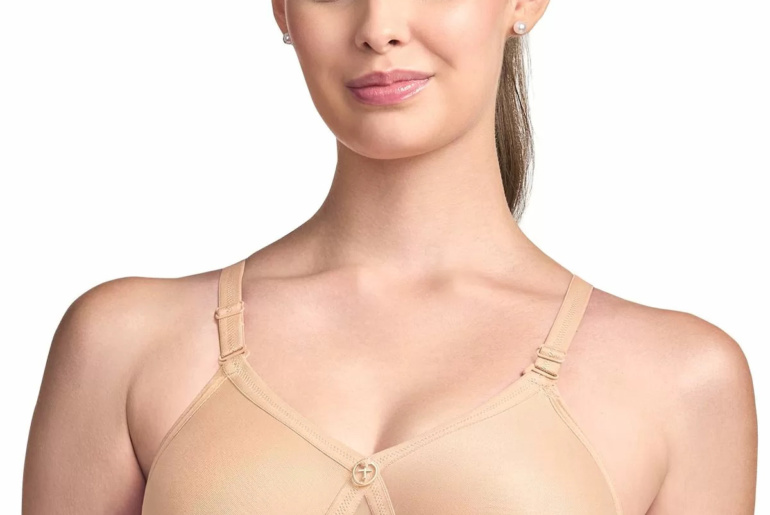
For full coverage on heavy breasts, you want three things working together: full cups, a wide supportive band and a multi-row back hook (so the band tension spreads out instead of cutting in). Every bra below is non-wired, full coverage and built with a 4×4 back hook, which is exactly why they handle a fuller bust so much better than a standard two-hook bra. Here’s how I would match them to you:
Now let me actually explain why- one frustration at a time.
“I just want one bra I can wear all day without thinking about it”
This is the most common ask I hear, and it’s the one Trylo Krutika Plain is built for. If you only buy one bra off this list, make it this one.
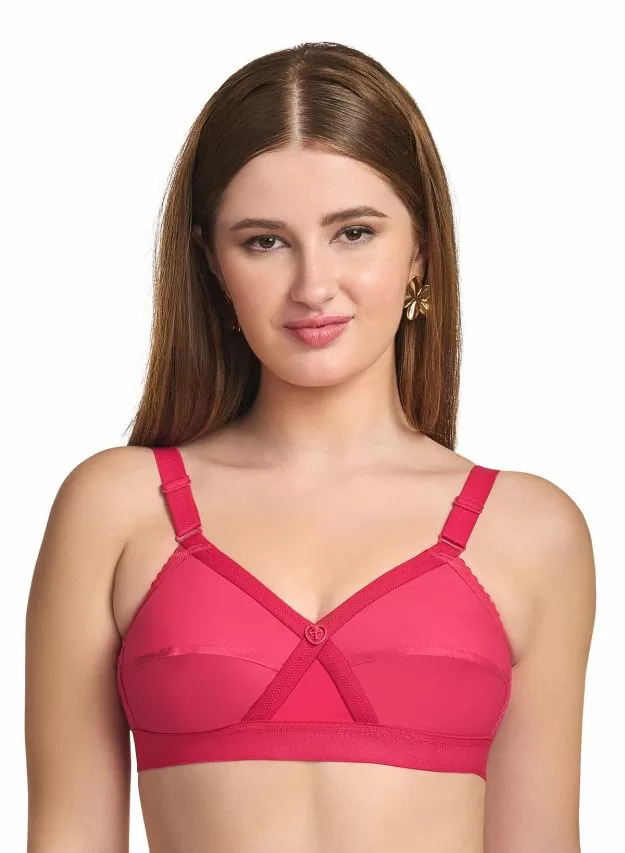
It’s 100% cotton, non-padded and non-wired, with full coverage and a 4×4 back hook. Translation for a heavy bust: the cotton breathes (so no sweaty, itchy afternoons), there’s no wire to dig in, and those four rows of hooks let the band sit firm and wide across your back instead of biting into one thin line. The broad elastic is what actually holds your shape through the day, and the cushioned straps are the detail I appreciate most; they are the reason you don’t end up with those angry red grooves on your shoulders by evening.
It’s quietly become Trylo’s most popular daily-wear cotton bra, with well over a thousand reviews sitting around the 97% mark, and a lot of those are from women in G and H cups, which tells you it genuinely holds up at the fuller end, not just on paper. This is the “set it and forget it” bra. The one that disappears under your kurta or tee and just works.
“I need that kind of support, but I can’t keep spending a fortune on bras”
Completely fair. Good support shouldn’t be a luxury, and this is where Riza CottonFit comes in as the smart-budget pick.
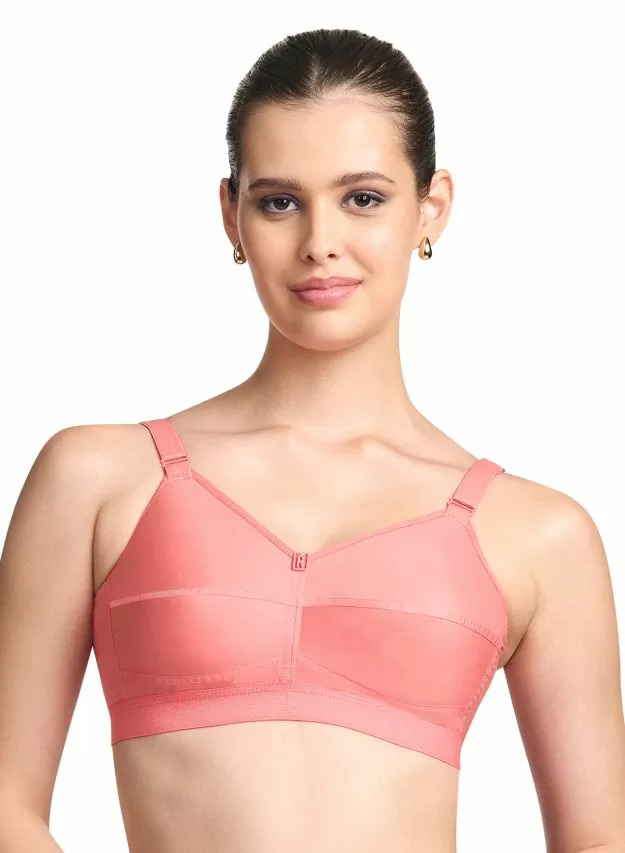
It carries the same core formula 100% cotton, non-padded, non-wired, full coverage, 4×4 back hook, but it’s the most wallet-friendly bra on this list, often starting around ₹319. What I particularly like for heavier busts is the broad straps and the fixed-strap construction: the wide straps spread the weight so they don’t pinch or leave marks, and because the straps are fixed, nothing creeps loose halfway through a busy day. The brand actually pitches it as staying secure even during more active movement, and that holds up; it’s the one I’d reach for on a running-around, errands-and-chores kind of day.
If you want to stock up on two or three everyday bras without flinching at the total, this is the one to buy in multiples.
“I don’t want padding, but I still want my shape to look good under clothes”
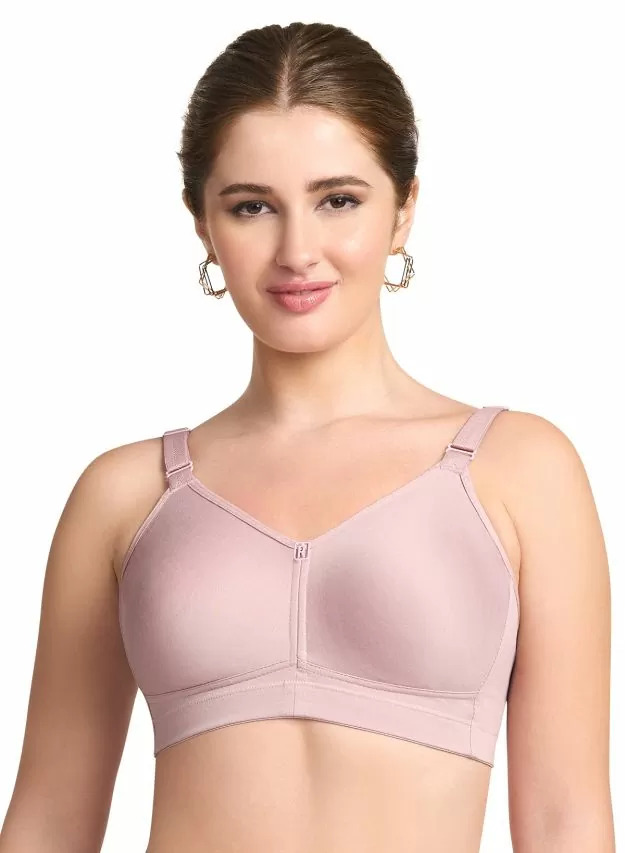
Ah, the eternal tension. A lot of fuller-busted women don’t want heavy padding (more heat, more bulk, more weight), but going completely unstructured can leave clothes looking a little flat or shapeless. Riza T-Fit is the clever middle path.
It’s still non-padded and non-wired, but it uses double-layered molded cups, and that’s the magic trick. The molding gives you a smooth, rounded, natural shape without adding padding, so your tees and fitted tops sit nicely instead of sagging. On top of that, it has a broad inner belt, which is a genuinely underrated feature for heavy breasts: that wider band underneath gives you extra lift and stops the whole thing from rolling up. Add the 100% cotton feel, full coverage, seamless finish and the usual 4×4 hook, and you have got a bra that supports and flatters. If the Krutika is your comfort default, the T-Fit is your “I want to look a little more put-together today” option.
“My bra always shows under fitted outfits; the seams, the texture, all of it”
If your real enemy is visible bra lines under a tight dress, a clingy top, or party wear, this is your bra: Trylo Alpa.
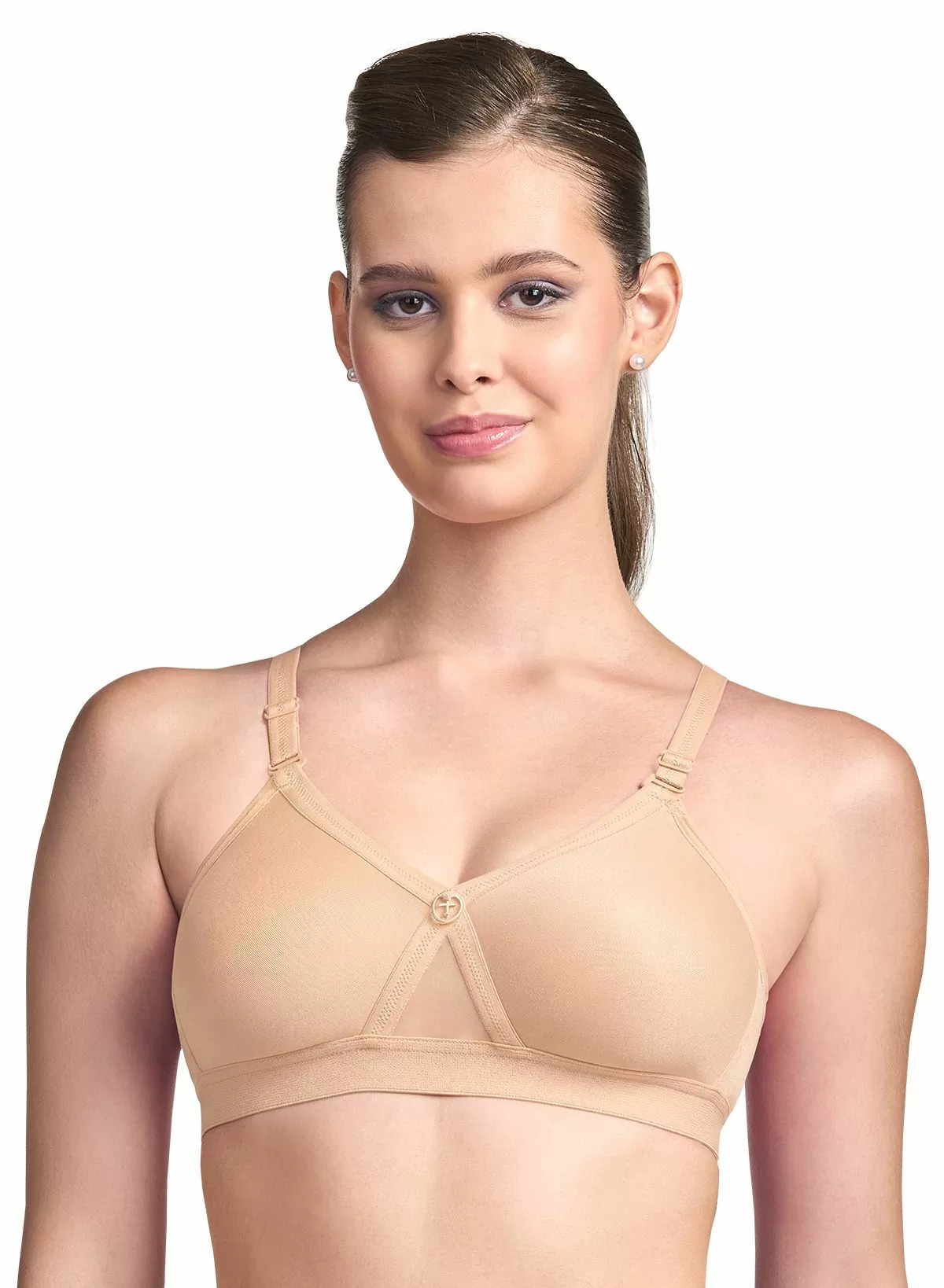
Alpa is seamless, molded, non-padded and non-wired, designed specifically to vanish under tight outfits and party dresses. Because there are no seams or stitching to print through the fabric, your clothes lie flat and smooth over the top, no lumps, no lines, no revealing texture. It still gives that firm “X” support and full coverage with the 4×4 back hook, so you are not sacrificing a single bit of containment for the sleek look. The other thing I love, especially for Indian summers and long events: the fabric is highly sweat-absorbing, so you stay dry even when you are dressed up and dancing in the heat. With over a thousand reviews and plenty of H-cup buyers, it’s clearly earning its keep at the fuller end too. This is your wedding season, occasion-wear, “I refuse to see my bra through this dress” hero.
“Honestly, I just want to treat myself to something that feels a bit nicer”
You have earned it. When you want everyday support that feels a touch more premium, go for Riza SuperFit.
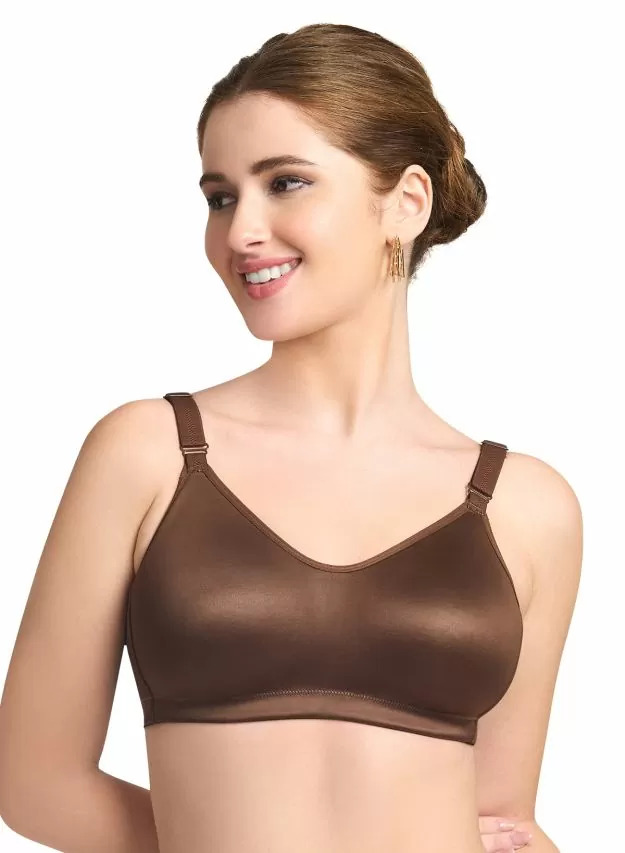
The clever bit here is the dual-layer fabric: satin on the outer side, cotton against your skin. So the surface that touches you stays soft and breathable like a good cotton bra should, while the outer satin layer gives a smooth, slightly luxe finish that glides under clothing. It’s seamless, molded, non-padded, non-wired, full coverage, with the dependable 4×4 back hook and smooth adjustable straps, meaning you get to fine-tune the strap length, which fuller busts often need. It sits at the top of this line-up price-wise (around ₹599), and it feels like it. Think of SuperFit as the everyday workhorse and a little gift to yourself rolled into one.
Quick comparison
| Bra |
Best for |
Padding / Wire |
Fabric |
Coverage & Hook |
| Krutika Plain |
All-day everyday comfort |
Non-padded, non-wired |
100% cotton, broad elastic, cushioned straps |
Full coverage, 4×4 hook |
| Riza CottonFit |
Same support, lower price |
Non-padded, non-wired |
100% cotton, broad straps |
Full coverage, 4×4 hook |
| Riza T-Fit |
Shape without padding |
Non-padded, non-wired |
Cotton feel, double-layered molded cups, broad inner belt |
Full coverage, 4×4 hook |
| Trylo Alpa |
Invisible under fitted/party wear |
Non-padded, non-wired |
Seamless molded, sweat-absorbing |
Full coverage, 4×4 hook |
| Riza SuperFit |
A smoother, slightly luxe upgrade |
Non-padded, non-wired |
Satin outer + cotton inner, seamless molded |
Full coverage, 4×4 hook |
How to actually pick the right one for you
A few quick rules of thumb I would give as a friend:
- If you are brand new to this list, start with the Krutika Plain. It’s the safest, most universally comfortable choice, and it tells you a lot about how the brand fits.
- Buying two or three at once? Mix a couple of CottonFits (budget daily) with one T-Fit or SuperFit for “nicer” days.
- Coverage problems usually are not the cup; they are the band. A wide band with a 4-row hook is what keeps a fuller bust supported, which is exactly why every bra here uses a 4×4 back hook. If your current bras only have two hooks, that alone could be most of your discomfort.
- Always go by your measured size, not your “usual” size. Most fit complaints with heavy busts come down to a band that’s too loose, which throws all the support onto the straps. Measure first.
FAQ
What kind of bra gives the best full coverage for heavy breasts?
A non-wired, full-coverage bra with full cups, a wide supportive band and a multi-row back hook. The four-row (4×4) hook is the key detail; it spreads band tension across your back so the bra supports a heavier bust without digging in. All five Trylo bras above are built on exactly this construction.
Are non-wired bras supportive enough for a heavy bust?
Yes, support for a fuller bust comes mainly from the band, the cup coverage and the hook structure, not from underwire. A well-built non-wired bra like the Trylo Krutika Plain or Riza T-Fit can hold and shape a heavy bust comfortably, often more comfortably than wired styles, because there’s no wire to poke or pinch over a long day.
Which is the most comfortable everyday bra for heavy breasts?
The Trylo Krutika Plain is the go-to all-day option: 100% breathable cotton, broad supportive elastic, cushioned straps that don’t cut into your shoulders, full coverage and a 4×4 back hook.
I don’t want padding, but my shape looks flat. What should I wear?
Look for molded (not padded) cups. The Riza T-Fit uses double-layered molded cups plus a broad inner belt to give a rounded, natural shape and extra lift without any padding, so your clothes still sit nicely.
Which bra won’t show under tight or party clothes?
A seamless, molded style. The Trylo Alpa is made specifically to disappear under tight outfits and party dresses, with no seams and no padding, giving full coverage and firm support.
Is there a budget-friendly option that still supports a heavy bust?
Yes, the Riza CottonFit keeps the same full-coverage, non-wired, 4×4-hook formula with broad straps at the lowest price point of this lineup. It’s the easy one to buy in multiples.
The bottom line: if you have been hunting for “the best full-coverage bra for heavy breasts,” the honest answer is that one brand, Riza by Trylo, covers basically every version of that need. Start with the Krutika Plain for daily comfort, add the CottonFit when you are watching the budget, reach for the T-Fit when you want shape, the Alpa when you want to go invisible under a fitted outfit and the SuperFit when you simply want to treat yourself.