
Category

blog

Category

There’s something magical about the rains in India. The way the dry earth soaks up the first drops and releases that sweet smell of petrichor and the lush green hills suddenly waking up from their summer slumber, and rivers flowing with renewed strength, monsoon brings the country alive in ways no other season can.

While many people think twice before planning trips during this time. But people who actually love traveling will tell you that the monsoon is the best time to see India’s raw, untamed beauty. From mist-covered mountains to roaring waterfalls, every corner has a story waiting to be discovered.

CherryOnTopBlog celebrates the magic of monsoon in India, inviting readers to rediscover the soul of travel with destinations like misty Munnar, roaring Cherrapunji, and lush Coorg, where each raindrop enhances the narrative of nature’s untouched beauty.

Sayantini is a well-known blogger who has been inspiring readers since 2013 with her authentic voice and engaging storytelling. Through CherryOnTopBlog, she blends beauty, fashion, lifestyle, and travel into a space that feels both relatable and trustworthy. Her work is recognized for being honest, heartfelt, and deeply connected to the everyday experiences of her audience.

So, if you’ve been thinking about a rainy escape, here’s our list of the best monsoon destinations in India to explore in 2025.

1. Munnar, Kerala

Munnar, Kerala

When the monsoon arrives in Kerala, Munnar becomes a dreamscape. Rolling tea gardens turn a shade greener, clouds hang low on the hills, and tiny streams criss-cross the valleys. The rain enhances everything, the aroma of tea, the quiet of the forests, and even the joy of sipping hot chai at a roadside stall.

If you’re looking for the best monsoon destinations in India, Munnar should be high on your list. Walk through tea plantations, visit Attukad Waterfalls, and lose yourself in the calmness of Eravikulam National Park.

2. Cherrapunji, Meghalaya

Cherrapunji, Meghalaya

Cherrapunji is one of the wettest places on earth, and during the monsoon, it’s nothing short of magical. Imagine standing near the roaring Nohkalikai Falls or crossing the famous double-decker living root bridge while raindrops patter around you.

The misty roads, endless waterfalls, and cloud-filled valleys make this a once-in-a-lifetime experience. For anyone chasing the rains, this is truly among the best monsoon destinations in India.

3.Coorg, Karnataka

Coorg, Karnataka


Coorg is often called the Scotland of India, but during the monsoon, it transforms into something even more enchanting. Coffee estates glisten with fresh dew, Abbey Falls roars in full glory, and the landscape feels like it’s straight out of a painting.

Whether you’re trekking through Pushpagiri Wildlife Sanctuary or simply enjoying the smell of wet coffee beans, Coorg has a charm that’s best experienced in the rains. No wonder it’s considered one of the best monsoon destinations in India for nature lovers.

4. Valley of Flowers, Uttarakhand

Valley of Flowers, Uttarakhand

If there’s one place that defines the magic of monsoon, it’s the Valley of Flowers. Every year during July and August, this UNESCO World Heritage Site blooms with hundreds of colourful flowers, covering the valley like a giant carpet.

The trek might be challenging in the rain, but every step is worth it. With clouds floating around and Himalayan peaks peeking through, it’s a surreal experience. That’s why it’s counted among the best monsoon destinations in India for trekkers and photographers.

5. Lonavala, Maharashtra

If you live in Mumbai or Pune, you don’t have to travel far to enjoy the rains. Lonavala is the go-to monsoon getaway, famous for its waterfalls, misty hills, and endless greenery. Bhushi Dam and Tiger’s Leap are must-visits, especially when rain adds to their beauty.

Add a hot plate of vada pav to the mix, and you’ll know why locals swear by this hill station as one of the best monsoon destinations in India.

6. Shillong, Meghalaya

Shillong, Meghalaya

Shillong, often called the Scotland of the East, is breathtaking during the monsoon. The hills are draped in green, waterfalls gush with all their might, and the air feels fresh and alive.

Take a walk through the charming streets, visit Elephant Falls, or simply sit by Umiam Lake and watch the rain. For those who love slow, soulful travel, Shillong easily ranks among the best monsoon destinations in India.

7. Alleppey, Kerala

Alleppey, Kerala

Floating in a houseboat through Kerala’s backwaters is always special, but when it rains, the experience becomes unforgettable. The water reflects grey skies, coconut trees sway in the breeze, and the sound of raindrops on the roof adds to the calm.

Alleppey is perfect for couples or anyone looking for peace and slow travel. It’s a place where monsoon creates poetry. Without a doubt, it belongs on the list of best monsoon destinations in India.

8. Mount Abu, Rajasthan

The only hill station in Rajasthan, Mount Abu, wears a different charm in the rains. Nakki Lake brims with water, the Aravalli ranges glow with greenery, and the Dilwara Temples shine against the cloudy backdrop.

It’s a peaceful retreat, less crowded compared to other hill stations, yet equally captivating. For those looking for a unique twist to their rainy travels, Mount Abu deserves a spot among the best monsoon destinations in India.

9. Wayanad, Kerala

Wayanad, Kerala

Wayanad is a land of spice plantations, caves, and lush forests. During monsoon, everything here feels fresh and alive. The Edakkal Caves look mysterious, waterfalls like Meenmutty and Soochipara are at their strongest, and the wildlife sanctuaries are thriving.

Wayanad is also famous for the ‘Neelakurinji’ flowers, which bloom once in 12 years. If you’re lucky enough to witness it, you’ll know why travellers call it one of the best monsoon destinations in India.

10. Mahabaleshwar, Maharashtra

Mahabaleshwar, Maharashtra

Mahabaleshwar is another hill station that becomes irresistible during the monsoon. The viewpoint at Arthur’s Seat offers stunning views of rain-filled valleys, Venna Lake looks serene, and strawberries taste even sweeter in the cool weather.

It’s a perfect blend of adventure and relaxation, making it one of the best monsoon destinations in India for families and couples alike.

11. Kodaikanal, Tamil Nadu

In Tamil Nadu, Kodaikanal takes on a fairytale-like charm during monsoon. The forests around are wrapped in mist, lakes shimmer with raindrops, and treks become more exciting. Silver Cascade Falls and Coaker’s Walk are must-visits in this weather.

For those who love quiet and romantic getaways, Kodaikanal is undoubtedly one of the best monsoon destinations in India.

Travel Tips for Exploring India in the Monsoon

Travelling during the monsoon needs a little extra planning. Here are some detailed tips to make your trip smooth:

  • Pack smart: Carry light raincoats, quick-dry clothes, and waterproof shoes. Umbrellas are handy but don’t work well in windy hill stations.
  • Keep buffer time: Trains and flights may get delayed due to weather, so keep an extra day or two in your itinerary.
  • Stay connected: Some regions, especially in the Himalayas and Northeast, face network issues. Download offline maps before you go.
  • Eat wisely: Stick to freshly cooked food and bottled water to avoid stomach issues that can happen in damp weather.
  • Travel insurance: Unexpected cancellations or medical emergencies are common in the monsoon. It’s best to be covered.

Things No One Tells You About Travelling in the Monsoon

Most travel guides paint only the pretty picture, but here’s the real truth you’ll be glad to know before you go:

  • Leeches are real: In places like Kerala and Meghalaya, you might encounter leeches during treks. They’re harmless, but carry salt or lime to remove them.
  • Roadblocks happen: Landslides are common in hilly regions. Always check local news before heading out.
  • Unexpected joys: Locals are often friendlier and more relaxed during the off-season. You’ll find stories and warmth that peak season tourists miss.
  • Cheaper stays: Hotels and homestays slash their prices, so you get luxury experiences at half the cost.
  • Photographs are dramatic: Cloudy skies, mist, and rain-soaked landscapes make for stunning travel photos.

Why Monsoon Travel in 2025 Is Worth It

The monsoon is not just a season in India—it’s an emotion. It teaches you to slow down, to enjoy a hot cup of chai while listening to the rain, to appreciate nature’s raw power. While summer and winter get most of the tourist attention, the rains reveal a different, often more beautiful, version of India.

If you’re planning your next adventure, pick one of these best monsoon destinations in India in 2025. Whether it’s the flower-filled meadows of Uttarakhand, the misty tea gardens of Munnar, or the quiet charm of Udaipur’s lakes, you’ll carry memories that stay longer than the season itself.

Final Thoughts

Monsoon in India is not just about rain; it’s about renewal. It’s about watching nature paint everything fresh, about sipping tea while clouds roll in, and about finding joy in the simplest of things.

From Kerala’s backwaters to Meghalaya’s waterfalls, every destination tells a different story. These are not just places to tick off a list, but experiences that stay with you long after you’ve left.

So, in 2025, when the rains arrive, don’t hide indoors. Pack your bags, pick one of the best monsoon destinations in India, and let the season surprise you.

 

When I decided to see the unseen, untasted beauty of North Bengal, everyone kept warning, “Not the best season to go!” Friends said the roads would be slippery, the tea gardens too muddy, and the views covered in fog. But my heart whispered otherwise.

I packed my bag anyway and boarded a shared car to Tinchuley. What I discovered wasn’t just a hill station—it was the joy of owning every corner of a place that usually buzzes with tourists.

That trip changed the way I look at travel. And here’s why you, too, might want to give off-season North Bengal a chance.

Cherryontopblog

CherryOnTopBlog, founded and thoughtfully curated by Sayantini, has earned its reputation as a trustworthy Indian beauty, fashion, and lifestyle platform, thanks to its honest, experience-based reviews and engaging storytelling.

The Travel category is a standout section—not just an afterthought—where Sayantini artfully blends personal narrative with practical insights, offering readers immersive travel stories, detailed itineraries, and soulful inspiration.

Whether you’re planning your next getaway or daydreaming from home, Cherry On Top’s travel posts consistently deliver an authentic, warm, and expert-driven lens into destinations both familiar and offbeat.

Silence Becomes the Real Luxury

Traveling Takdah

Traveling off-season is like booking a premium experience—except you don’t pay for it.

In Takdah, a place usually busy with travellers in peak season, I found myself sipping tea at a local homestay balcony where the only sound was raindrops tapping the roof. No honking cars, no crowd waiting for selfies at viewpoints—just silence and me.

There’s something liberating about sitting quietly in a spot where, during peak season, you’d probably be queuing to take turns for a picture.

In Tinchuley, I walked through orange orchards without meeting a single soul. In Sittong, kids from nearby houses became my only “tourist crowd.”

This silence feels like the luxury we city-dwellers constantly crave.

Weather Adds Its Own Drama

Who said fog and drizzle spoil a trip?

The clouds rolling over Takdah’s colonial bungalows looked straight out of an old movie set. Walking in the misty lanes felt more magical than any “clear blue sky day.”

In Sittong, the orange blossoms had tiny raindrops on them, sparkling like nature’s own fairy lights. The river Teesta, swollen with rain, roared in the distance—it was dramatic, almost poetic.

Yes, the umbrella became my best friend, and yes, my shoes got dirty—but isn’t that part of the story we later cherish?

Homestays Treat You Like Family

During peak season, homestays are packed. Owners are busy managing guests. But off-season? They treat you like a long-lost cousin.

In Tinchuley, my host insisted I join the family for dinner instead of eating separately. We had piping hot dal-bhat, homegrown vegetables, and chicken cooked in earthy spices. They even shared stories about how these villages change with seasons—orange harvests in winter, mist in monsoon, crisp skies in autumn.

In Takdah, an elderly host lit up a fire in the kitchen and brewed me ginger tea. We sat and spoke for hours, something that rarely happens when they’re rushing between guests in peak months.

Off-season gives you something money can’t buy—real connections.

Offbeat Trails Truly Feel Offbeat

Everyone wants “offbeat destinations” these days. But let’s be honest—once the Instagram crowd discovers a place, it doesn’t stay offbeat anymore.

Take Sittong for example. In winter, it’s known as the Orange Village, and the place overflows with tourists. But during the rains? The orchards are empty. You walk into lanes where the only company are birds and butterflies.

In Takdah, I explored a moss-covered monastery where I was the only visitor. The silence there was surreal—it almost felt like the mountains were speaking to me.

And in Tinchuley, the trails leading to hidden waterfalls were mine alone. No one photobombed my view, no rush to “cover all points.” I could sit by the stream as long as I wanted.

Travel Becomes Kinder to Your Pocket

To be very honest, travel is not just about experiences, it’s also about budget.

During the off-season, homestay tariffs in Tinchuley and Takdah drop drastically. Even shared cars become more negotiable. Guides, too, have more time and often agree for half the usual price.

In fact, my two-night stay in Sittong (including food) cost less than what I’d normally spend in Darjeeling for a day during peak season.

When the place itself feels luxurious—peace, food, nature—you don’t miss fancy resorts.

The Real Photos Come Alive

You know those touristy pictures with twenty heads in the background? Off-season saves you from that.

In Takdah’s orchid centre, I had the whole greenhouse to myself. I clicked photos of orchids in every shade without worrying about blocking someone’s frame.

In Tinchuley, a local helped me reach a hidden viewpoint where I took pictures of the Teesta and Rangeet rivers meeting. Normally crowded, but that day—completely empty.

Even the mist in photos looked magical, almost like a filter I didn’t have to add.

Conversations With Locals Turn Into Stories

Locals open up when they’re not too busy.

In Sittong, an old farmer told me how the orange trade has changed their economy over decades. In Takdah, I met a lady who had worked in the tea gardens for 30 years—she spoke about how tea plucking feels different in each season.

These were not “tour guide” stories. They were lived experiences, told slowly, with warmth. And when you listen, you realise travel is not just about places, but people too.

The Roads Less Travelled Feel Safer

Strangely enough, traveling off-season sometimes feels safer.

During my trip, drivers were more cautious (thanks to empty roads). Homestay hosts checked in on me more often, ensuring I had food and warmth. Even trekking trails, though slippery, felt safe because there was no rush of tourists running up and down.

Off-season, the mountains embrace you with a slower rhythm.

Why I’ll Always Choose Off-Season Again

That one trip to Tinchuley, Takdah, and Sittong in the rains rewired something in me.

I realised travel is not about ticking off places—it’s about pausing, listening, and living with a place, not just in it.

Would I have loved the clear winter skies of Darjeeling? Sure. But would I trade that for the silence of an empty trail in Sittong where the only sound was my heartbeat and the rain? Never.

A Few Tips If You Plan Your Off-Season North Bengal Trip

  • Carry sturdy shoes and a good raincoat (trust me, you’ll thank yourself).
  • Keep some extra travel time—roads may be slower in the rains.
  • Book homestays directly with locals for better deals.
  • Don’t expect perfect weather rather embrace the unpredictability.
  • Carry books or a journal, misty evenings invite reflection.

Final Thought: The Joy of Owning a Place (At Least For a While)

Traveling off-season in North Bengal felt like the mountains whispered, “Thank you for coming when no one else does.”

When you stand at a viewpoint in Takdah with clouds wrapping you in silence or sip hot tea in Tinchuley while rain dances on orange orchards, you realise—the best trips are not about season, but about heart.

And sometimes, the heart beats louder when the crowd is gone.

Are you someone who is worried about wrinkles, fine lines, dark spots or even skin cancer? No you are not alone in this!  This is a serious skin cancer for both men and women. Our skin is always exposed and thus we are prone to many skin issues.

Do you wonder why? No, not only due to your liver, kidneys, pancreas or your oily, dandruff full scalp. The sun and its harmful UV rays could be a big reason behind many skin issues.

Studies by National Institutes of Health show 65% to 90% of melanoma cases happen due to UV exposure. The reason behind 90% of skin cancers is also the sun’s harmful UV rays. This also includes basal cell carcinoma and squamous cell carcinoma .

More than 30% of people do not wear sunscreen on a daily basis. This happens mostly due to the sticky texture of the sunscreen, the excessive sweating after application and also many forget to apply before going out or even at home.

But this won’t help. We need to prevent these skin diseases. We need to spread awareness about how harmful these UV rays are. Our goal should be to make people aware about the benefits of sunscreen at large. This blog will guide you on selecting and using the best sunscreen for face according to your skin type.

Sunscreen For Face : Need of the Hour : Why?

We can often read articles and frequently asked questions on social media, how people very conveniently skip the sunscreen for face and body. Yes you are at home, yes it is cloudy outside, yes it is winters or raining outside. But that is not a reason enough to skip your sunscreen.

In fact, studies showed how the flame from the gas oven in the kitchen and the screen lights from the phones and laptops emit rays. These rays are harmful. They can affect your skin which might lead to spotting and early signs of ageing. This exposure leads to wrinkles, sunspots and uneven skin tone.

Can you imagine your skin constantly battling the sun’s harmful rays? Everyday activities like walking to work or sitting by a window expose you to UV radiation. Without proper protection, your skin suffers. Collagen breaks down. That causes premature aging. Sunburns damage skin cells and increase the risk of melanoma.

Another major reason because of which people usually avoid using sunscreen is the after effects. After applying sunscreen, many of us sweat a lot. We at times find a white caste on the face. Some of our faces turn black and oily too. Most importantly, we need to reapply sunscreen almost every 3 hours. But fact is – We Need Sunscreens To Protect Our Delicate Skin.

So, how can you shield yourself from all these dangers, myths and mental blocks? The only answer to that is consistent use of Sunscreen for face.

Embrace Sunscreen For Face For Sun Protection

The first line of defence for your skin against sun damage is using a good broad-spectrum sunscreen with SPF 50 and more. A high quality sunscreen creates a barrier and blocks harmful UV rays. But you must have been confused on which one to buy as there are so many sunscreens there in the market.

Criteria for A Good Sunscreen for Face

  • Your sunscreen should be a physical sunscreen.
  • It should be SPF 50 and above for better sun protection.
  • Your sunscreen should be broad spectrum and PA++++ in nature protecting the skin from UVA and UVB rays.
  • The formula that you will choose should be non-sticky and easily absorbable in skin.
  • Your sunscreen should suit your skin type to provide optimal results.

Types of Sunscreen for Face

There are 3 main types of sunscreen:

Physical(mineral) Sunscreen:

Physical(mineral) sunscreens contain mineral ingredients like zinc oxide and/or titanium dioxide. They remain on top of the skin and physically block UV rays. It is a better option than any other sunscreen. Mineral sunscreen starts working just after application.

Chemical Sunscreen:

Chemical sunscreens use ingredients that absorb UV radiation. They convert it into heat. Then it is released from the skin. They are easy to apply. It takes 15 – 30 minutes to start working after application. It is not advised by dermatologists as some of the chemical filters may get absorbed in the bloodstream.

Hybrid Sunscreen:

Hybrid sunscreens are a mix of both the physical and chemical filters. This type of sunscreen usually provides a broader spectrum to protect the skin. These can be a bit more expensive but it provides a combined benefit.

Choosing the Right Sunscreen for Face According to Your Skin Type

Choosing the right sunscreen is not that easy. But as we say nothing is impossible. So a little bit of research could provide you with the right one. One easy way to get your perfect sunscreen is according to your skin type.

  • Oily Skin – Finding the best sunscreen for oily skin can be a challenge at times. You need oil-free, gel based sunscreens for oily skin. They don’t clog pores. You would not sweat profusely when using a gel based thin textured sunscreen. Like Beauty of Joseon Relief Sunscreen.
  • Dry Skin – You can use a slightly thicker and creamy formula. It will protect your skin from the sun. It also will be hydrating and moisturizes your skin providing more protection. Like Beauty of Joseon Ginseng Moist Sunscreen Serum.
  • Normal Skin – The magic lies here. Your skin type allows you to try out any type of sunscreen.
  • Combination Skin – It’s tricky here. Best would be to go for a gel based sunscreen. That will provide protection and hydration both while preventing sudden breakouts.
  • Sensitive Skin – Due to the sensitivity, it is best for you to opt for fragrance-free and hypoallergenic sunscreens.

Sunscreen Application Tips & More:

  • Apply sunscreen as the last step in your skincare routine Guide, before makeup.
  • Apply it liberally 15-30 minutes before sun exposure. Reapply every two hours, or immediately after swimming or sweating.
  • Don’t forget often-missed areas like the ears, neck, and hairline.
  • Use a separate sunscreen for your face and body. Sunscreen for face is often lighter and less likely to clog pores.
  • Even on cloudy days, apply sunscreen. UV rays can penetrate clouds.
  • You should use about a nickel-sized amount of sunscreen for your face. Make sure to cover all exposed areas.
  • Don’t forget to check the expiration date. Expired sunscreen is less effective.
  • Try to consider mineral sunscreens containing zinc oxide or titanium dioxide.
  • Always read labels and choose products that are appropriate for your skin type.

Debunking Some Sunscreen Myths

Myth: Darker skin people don’t need sunscreen. They don’t get tanned.

Fact: Regardless of skin colour, everyone needs sunscreen. Every skin tone is prone to skin diseases including skin cancer without proper sun protection.

Myth: You only need sunscreen on sunny days.

Fact: The sun is visible every day. Even on cloudy days, the sun might look deemed. But the UV rays are capable of harming your skin without sun protection just the same as any sunny days.

Myth: Makeup with SPF is enough.

Fact: No, makeup with SPF is just not enough. You need a proper sunscreen in the daytime to provide your skin proper protection.

Myth: 3 finger sized sunscreen should be applied on the face.

Fact: Dermatologists suggest only a nickel size amount to apply on the face.

Final Thoughts

Investing in high end brands for moisturizers, face wash, toners and makeup would not help you. It would not stop sun spots, skin diseases, uneven skin tone and skin cancer from appearing.

Investing in a good Sunscreen for face with SPF50 and broad spectrum is an important step. It ensures skin protection from harmful UV rays. Using sunscreen generously is as important as keeping your skin hydrated.

Yes, some sunscreens could give you white cast, some make you sweat profusely. Some of them make your skin feel suffocating. So you just have to follow this guide properly and invest in a good sunscreen which suits you the best.

So don’t wait any longer. Now that you are well aware about the pros and cons of sunscreen, go buy it!

Sunscreen Essentials by CherryOnTopBlog

Your ultimate guide to sun protection that actually works

Effective skincare starts with one non-negotiable step: daily sunscreen protection, and CherryOnTopBlog is your trusted guide to mastering this essential skincare habit. With studies showing that 65% to 90% of melanoma cases result from UV exposure, CherryOnTopBlog champions sunscreen as the foundation of any serious skincare routine. Our skincare experts help you navigate broad-spectrum SPF 50+ formulations, from lightweight gel-based options for oily skin to hydrating creamy formulas for comprehensive skincare protection. At CherryOnTopBlog, we believe true skincare success means protecting your skin from harmful UV rays every single day—making sunscreen the cornerstone of your daily skincare regimen.

Frequently Asked Questions:

  1. How often should one reapply sunscreen?

→ You should reapply sunscreen every two hours, or immediately after swimming or sweating. Even waterproof sunscreens need to be reapplied regularly.

  1. What ingredients should one avoid in sunscreen with oily skin?

→ Avoid sunscreens containing oils, fragrances, or alcohol. These can clog pores and cause breakouts. Look for non-comedogenic formulas specifically designed for oily skin.

  1. Can one use body sunscreen on the face?

→ While you can, it’s generally not recommended. Body sunscreens are often thicker and can clog pores, leading to breakouts. It’s best to use a sunscreen specifically formulated for the face.

  1. Is SPF50 enough?

→ SPF 50 blocks 98% of UVB rays. It’s a good choice for daily use.

Are you someone who is dreaming to achieve that coveted glowing and healthy skin? Well you are not the only one. There are more than 2 billion women globally who often do more than just slapping on a single cream!

Yes now we all know how important following a good daily skincare routine is! It not only provides you with a healthy glowing skin, it also takes care of the skin issues that you face more than often.

Pigmentation, dark spots, acne scars, sudden breakouts – you name it to have the skincare serums to treat them from within. By now you already know the importance of a morning skincare routine and an evening skincare routine. If not then you need to do your research properly darling!

But but but…..you might have thought it out. In spite of following the skincare routine guide, still you might not be getting that rejuvenated and glowing glass like skin??? Well then you must be going wrong with the techniques. Here comes the big reveal!!!

The secret lies in layering skincare products effectively. Yes, that’s the key. Layering them in the right order. But there are a plethora of serums, moisturizers, emulsions, essences and toners available. And that brings in multiple steps.

And we get it. Figuring out the skincare order can feel overwhelming. Fear not! This comprehensive guide will decode the process. It will ensure you get the most out of every precious drop. We’ll get deep into the science behind layering skincare products.

Then we will explore why the skincare order matters in our routine. And based on that will provide a step-by-step guide to building a skincare routine. This will cater to your unique skin needs. Let’s unlock the secrets to a flawless complexion – shall we!!!

Why Do Layering Skincare Products Matter?

Your skin is like a sponge. It can absorb as much as you want at once. But applying skincare products in the wrong skincare order will stop absorption. This will mean that some of the ingredients would fail to work. Do you think applying a thick cream before a light-weight thin serum would work?

Well no! The thick cream works like a barrier. Once the barrier is up, how can the thin skincare serum penetrate into the skin to treat the issues??? So layering skincare products is a strategic way to allow each product to enter the skin effectively. And this will let the products show their benefits.

This is why you need to know the correct skincare order to make them work. There is another important reason why you need to learn the correct skincare order. So you apply the products according to the correct skincare routine steps. Then all the ingredients work together to enhance each other’s effectiveness.

For example you apply a niacinamide serum after a retinol serum followed by a hydrating moisturiser. We all know retinol might dry your skin. So this method provides proper hydration. This will help all the ingredients work better to give optimal results.

The Golden Rule: Thinnest to Thickest

The scientific golden rule of layering skincare products is to apply them from thinnest to thickest consistency. This will help the light-weight watery products to penetrate into the skin first. This will ensure that the ingredients in thinner texture would be able to start working. They will also arrange the path for the thicker textures.

This is important. These thicker textures are heavier. They provide more hydration. Not only that, they also protect the skin barrier preventing anything else from entering your skin. This order enables each product to work effectively without getting blocked by heavy layers.

When you paint a wall would you apply a thick coat of primer after a thin layer of paint? Of course not! The same logic applies to skincare routines. This rule helps your skin efficiently absorb the active ingredients in your routine, leading to better results.

Your Step-by-Step Guide to Layering Skincare Products

We are providing a step-by-step skincare layering guide to help you with your morning and evening skincare routines. You need to improvise them according to your skin type and specific skin issues.

Morning Skincare Routine:

Step 1: Cleanser

Start your day with a gentle cleanser to remove sebum, sweat and impurities. CosRX Good Morning Face Wash does the job perfectly well.

Step 2: Toner

Use a toner to maintain the pH balance of your skin by preventing it from getting dry. Use a light toner like Beauty of Joseon Ginseng Water.

Step 3: Serum

Use a serum as per your skin issues. You can also use a serum or two to enhance your skin quality. Klairs Vitamin C Drops brightens your skin. It also boosts collagen production. You can also use Plum Niacinamide and Rice Water Serum to rejuvenate your skin.

Step 4: Eye Cream

Using an eye cream is a must to treat dark circles and puffiness.

Step 5: Lip Balm

Hydrating your lips is as important as hydrating your skin and body. So apply your lip balm preferably with a SPF. The Hyphen Lip Balms have SPF too and are easily available at Nykaa.

Step 6: Moisturizer

Moisturizer acts as a barrier preventing loss of moisture. Choose a hydrating yet light moisturizer according to your skin type. Clinique 100 Hour Moisture Surge Cream is a good choice.

Step 7: Sunscreen

Sunscreen is non-negotiable! Apply a broad-spectrum physical sunscreen with SPF 30 or higher to protect your skin from harmful UV rays. Even on cloudy days! Try to keep applying it every 3 hours for better results.

Evening Skincare Routine:

Step 1: Double Cleansing

Yes, double cleansing is required to take away all the dirt, gunk and impurities of the whole day along with makeup. So first you need to use a cleansing balm or oil. Massage on your face. Emulsify it with water and rinse. Ginseng Cleansing Oil from Beauty of Joseon or Clinique All Day Cleansing Balm are good options.

Next you need to use a gentle water-based face wash according to your skin type. Minimalist Face Wash with salicylic acid takes away all the gunk with squeaky clean skin.

Step 2: Exfoliation (1 to 2 times a Week)

Try to use a chemical exfoliant twice a week.

Step 3: Hydrating Toner

Our skin needs a lot of hydration. So a hydrating toner will work magic when applied properly. Tirtir Milk Toner is a great option.

Step 4: Serum

Yes this is the key – always use a serum before a moisturizer. The serum needs to be according to your skin issues. For example you can use a retinol serum followed by a niacinamide and azelaic acid every alternative day to prevent ageing and breakouts.

Step 5: Eye Cream

By now, you know this layering is important. Apply in this order only as eye creams are thinner than moisturizers.

Step 6: Lip Balm

Good hydrating lips are absolute must haves.

Step 7: Moisturizer

Finally apply your moisturizer according to your skin type to lock all that moisture.

Adapting in Layering Skincare Products in Your Skincare Routine With Some Important Tips

  • Patch tests of all your products are important before actual application.
  • Remember – less is more! A few drops of serum and a pea sized amount of moisturizer does the job perfectly.
  • Give some time in between each layer so that each product gets absorbed properly.
  • Be mindful of potential ingredient interactions. For example, avoid using vitamin C and retinol at the same time, as they can destabilize each other. Use one in the morning and the other at night.

Final Thoughts

Layering skincare products in the right order is a scientific process. But it is not that critical. Initially it might all sound confusing. But once you get into the routine and understand the order – it is a piece of cake to ace the skincare routine steps.

Above all you need to choose the right products for your skin type to unlock your skin’s full potential and achieve a healthy, radiant complexion layering them in the right order. Last but not the least remember to be patient, consistent and always listen to your skin. Happy layering!

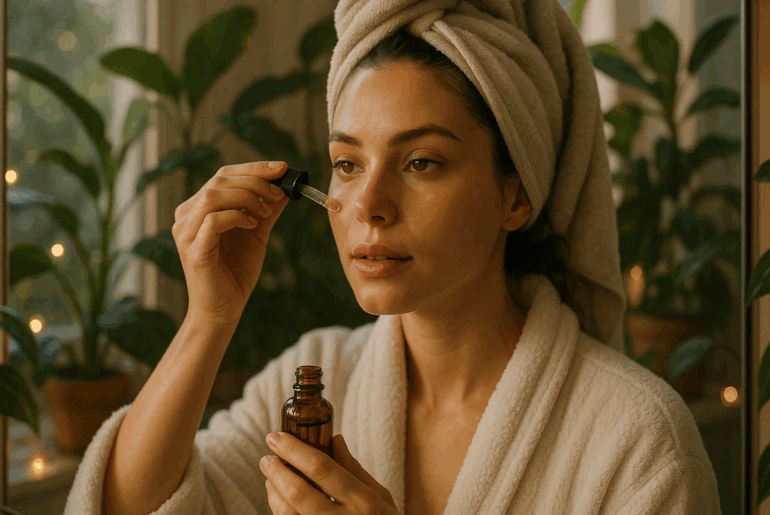
You must have heard about ‘skincare serums’ many times – be it on Instagram, Facebook, Nykaa, in Ads or in various blogs. It won’t be a surprise if you have wondered about exactly what a serum is!

Many of you must have done extensive research on it. But in the end got more confused with the number of serums available in the market. Worry not! Through this blog we will try to clear your confusion providing a thorough guide on skincare serums for your daily skincare routine guide.

Skincare Serums – The Must Have Solution In A Bottle

Welcome to the world of serums! Skincare serums have become a staple in our daily skincare routine these days. But what is this serum? What purpose does a serum serve? Why would you include it in your regime? Will it resolve skin issues without harming more?

You will get all the answers here one by one. But first let’s know what serum is.

What are Skincare Serums?

Skincare serums are lightweight and  concentrated formulas. Unlike heavy moisturizers, these are designed to deliver a high concentration of active ingredients directly to your skin.

Serums work like targeted treatments that penetrate deep into the skin. They address specific concerns like wrinkles, hyperpigmentation, acne, and dehydration.

Their formulation allows for better absorption, making them more effective than many other topical products. Serums are usually applied after cleansing and toning and before moisturizing following the thinner to thicker application technique.

Serums are generally water-based or oil-based, containing fewer lubricating and thickening ingredients. This allows for a higher concentration of active ingredients, ensuring maximum efficacy.

Benefits of Skincare Serums

Serums offer a multitude of benefits. This makes them an essential in any skincare routine. Their lightweight texture allows for deeper penetration. This helps them to deliver a concentrated dose of active ingredients directly to the skin cells. ome modern brands focus on supporting the skin’s natural ecosystem with microbiome-friendly, made-to-order formulations; for example, brands like Seven Regions build products designed to restore the skin barrier and feed the skin’s flora rather than relying on mass-produced, shelf-stable creams.

This targeted approach allows serums to effectively address specific concerns.  These concerns are fine lines, wrinkles, hyperpigmentation, acne, and dehydration. The concentrated formulas ensure that you’re getting the most out of your skincare.

The bonus is that the serums maximize results with minimal amounts. Less is more – that is the rule to use serums. Moreover, serums are incredibly versatile. They cater to a wide range of skin types and concerns. So the key features are –

  • Targeted Treatment
  • Deep Penetration
  • Potent Formula
  • Versatile

Types of Skincare Serums

As we all know already, the world of serums is vast, potent and versatile. You have acne, you have a serum to treat it. You have wrinkles, you apply a few drops of serum every day and reduce them.

You have spots, scars, hyperpigmentation, you get a super serum to treat it. So for every skin issue you have skincare serums at rescue. Let’s categorize serums as per their needs!

Vitamin C Serum

  • It takes away your tiredness and dullness, giving you brightened skin.
  • Vitamin C serum like that in Klairs Freshly Juiced Vitamin Drop works like an acne serum too, fading scar marks, dark spots and even hyper pigmentation.
  • It protects against sun damage and reduces fine lines.
  • This vitamin c serum like Minimalist Vitamin C 10% Serum boosts collagen production and keeps your skin firm and bouncy.

Hyaluronic Acid Serum

  • Hyaluronic acid serum provides deep hydration for your thirsty skin.
  • It makes your skin look fresh and glowy.
  • This serum soothes the skin from irritation and dryness.
  • Neutrogena Hydro Boost Serum is a perfect example that provides deep hydration and its gel texture makes it easier for oily skins to absorb more without making it greasy.
  • It is made lightweight and non-sticky like that in L’Oréal Revitalift 1.5% Hyaluronic Acid Serum and it quickly plumps the skin softening fine lines.

Serum with Retinol

  • Retinol works like magic as a key ingredient in anti anti-aging serum like that by The Ordinary Retinol in Squalane.
  • It reduces lines, improves skin texture, unclogs pores, clears up acne and breakouts.
  • Retinol works beautifully as an anti acne serum, preventing new acne and pimples from forming.
  • Plum 1% Retinol anti-aging face serum boosts collagen, reduces fine lines & wrinkles.

Serum with Peptides

  • Peptides are tiny proteins that signal your skin to make more collagen – helping your skin feel firmer and look lifted.
  • With regular use peptide serums like The Ordinary “Buffet” + Copper Peptides 1%, a multi-peptide cocktail, reduces fine lines and promotes firmness.
  • It works great as an anti-ageing serum. Products like Minimalist Multi-Peptide Serum, it strengthens skin barrier and boosts collagen production.

Serums with Salicylic Acid

  • Holy grail to prevent acne, pimples and sudden breakouts, salicylic acid serums are the best anti acne serums in the market.
  • Salicylic acid dives deep into your pores, dissolving oil, dirt, and dead skin that cause blackheads and pimples.
  • The Ordinary Salicylic Acid 2% Solution is one such product when applied after cleaning your face twice or thrice every week, you will notice your acne and pimples vanishing gradually.
  • It not only is an anti acne serum, it also reduces oiliness, exfoliates gently and shrinks blackheads and whiteheads.

Serums with Azelaic Acid

  • One of the best anti acne serum in the market would be the one with Azelaic Acid, like The Ordinary Azelaic Acid Suspension 10%.
  • Azelaic acid gently unclogs pores and kills acne-causing bacteria – great for stubborn pimples and even hormonal breakouts.
  • It reduces redness and rosacea, fades dark spots and acne scars and smooths rough or bumpy texture.

Niacinamide Serum

  • Niacinamide serum controls excess oil, minimizes pores, fades dark spots and acne marks and tightens the look.
  • It can be paired with other acids to amplify the effects.
  • This serum soothes redness, strengthens skin barrier and boosts overall skin glow.
  • You can use The Ordinary Niacinamide 10% + Zinc 1% or Minimalist Niacinamide 10% + Zinc with vitamin c and retinoids.

Alpha Arbutin Serum

  • Fades dark spots and pigmentation.
  • Evens out your skin tone.
  • Brightens dull skin.
  • Gentle on sensitive skin.
  • Whether you’re dry, oily, or combo – alpha arbutin fits in almost any skincare routine.
  • Using Minimalist Alpha Arbutin 2% + HA Serum regularly fades your dark spots and scars.

Green Tea Serum

  • Green tea is known for its calming properties – it helps reduce redness, inflammation, and overall skin stress.
  • It fights acne and breakouts, making it great for oily skin types.
  • Green tea is full of powerful antioxidants (like EGCG) that protect your skin from environmental damage and early aging.
  • Most green tea serums are lightweight but still give your skin a nice dose of moisture, like Innisfree Green Tea Seed Serum and Isntree Green Tea Fresh Serum.

Rice Water Serum

  • Rice water is known for giving skin that luminous, healthy glow. It helps fade dullness and dark spots over time.
  • It’s packed with vitamins and amino acids that deeply moisturize, leaving your skin feeling silky smooth.
  • Rich in antioxidants, it helps fight free radicals and keeps your skin looking firm and youthful.
  • I’m From Rice Serum, The Face Shop Rice & Ceramide Moisturizing Serum and Beauty of Joseon Glow Deep Serum are some excellent rice water serums to treat various skin issues.

Lactic Acid Serum

  • Lactic acid is an alpha hydroxy acid (AHA) that works on the skin’s surface to sweep away dull, flaky skin – leaving it soft and refreshed.
  • Brightens uneven exfoliating, hydrates while exfoliating and softens the lines gradually.
  • The Ordinary Lactic Acid 5% or 10% + HA gives smooth texture and is suitable for sensitive skin also.

Glycolic Acid Serum

  • Glycolic acid gently lifts away the top layer of dull, rough skin – making way for fresher, glowier skin underneath.
  • Brightens dull, tired-looking skin, fades dark spots & acne marks, smooths out rough texture and reduces fine lines over time.
  • L’Oréal Revitalift 10% Glycolic Acid Serum and Minimalist 8% Glycolic Acid Serum can be real game changers and can be applied all over the body too along with the face.
  • Best to be used twice a week and then build it up.

How To Choose The Right Serums For Your Skin?

Yes, this step is very important as you should not apply every other serum on your face. Short listing some key points to consider below –

  • You need to identify your skin issues.
  • Along with that you need to be sure about your skin type,be it oily, dry, normal, sensitive or combination skin.
  • Once you short list some of the must have serums in your skincare routine, go through their ingredient list and consider the concentration of the actives.
  • Before buying go through the reviews and do an extensive research on the serums to know about their possible side effects.
  • Always do patch tests before proper application.

How To Include Serums in Your Daily Skincare Routine?

You can very easily include serums into your daily skincare routine:

  1. Always start with a clean face.
  2. Apply a toner to balance your skin’s pH.
  3. Apply a few drops of serum to your face and neck and gently pat or massage it into your skin.
  4. Always apply a moisturizer after a serum to lock in hydration and create a protective barrier.
  5. Don’t forget to apply a broad-spectrum sunscreen in the morning to protect your skin from sun damage.

Side Effects & Precautions

While serums are generally safe, some people may experience side effects, especially when using potent ingredients like retinol or salicylic acid. Potential side effects could be irritation, redness, dryness, flaking and sudden breakouts. So always start slowly. Slowly include the actives in your skin and gradually increase the concentration and frequency of application. Always remember, less is more and thin to thick application technique!

Final Thoughts

One of the powerful tools that can transform your skin is skincare serums. To utilise them to their fullest potential, you need to understand their benefits, different types, and how to choose the right one for your needs.

By including serums in your daily skincare routine, you can unlock radiant and healthy skin. Whether you’re looking to reduce wrinkles, brighten your skin, or treat acne, there’s a serum out there for you.

So, embrace the power of serums and elevate your skincare routine to the next level!

If you are new to skincare or planning to restart your skincare journey, you must be wondering where to start. Well you have the answer for your own question!

When you come back home, what is the first thing you will do? You will be cleaning your arms, feet and your face – isn’t it!!! When you are outside, be it at the office the whole day, or spending some quality time with your friends or your beloved shopping or at a cafe, you are accumulating a lot of dust, dirt, pollution, sweat and harmful UV rays if it is in the daytime.

The moment you step in your home, you will clean your face, getting rid of all the dirt from your skin to get a squeaky clean face. So yes, that is how you start your skincare routine guide everyday with a good face cleanser.

This cleanser will remove dirt, dust, oil, sweat, pollution, makeup and all other impurities. It will unclog your pores and prevent breakouts, acne, large pores, dullness and premature ageing. Choosing the best cleanser for skin type specific to different individuals is the most crucial step in your whole routine.

Moreover there is an ample amount of cleansers available in the market from different brands for different skin issues. This surely will confuse you from choosing the right one for yourself. This guide will be your holy grail to choose the right cleanser for your skin type and its specific needs.

Understanding Your Skin for the Best Cleanser for Skin Type

Before talking about different cleansers and their purposes, you need to identify your skin type. This will help you choose the right cleanser to keep your skin clean and treat specific issues. The primary categories are :-

  • If you have oily skin then your skin produces excess sebum which leads to a shiny appearance, enlarged pores and frequent breakouts.
  • Dry skin lacks sufficient moisture. This results in tightness, flaky and itchy skin, and rough texture.
  • If you have combination skin, then you have both oily and dry skin. You most probably have an oily T-zone (forehead, nose and chin) with dry cheeks.
  • Sensitive skin gets irritated very easily by certain ingredients and environmental factors. This leads to redness, itching and burning sensation on all over the face or on specific parts.
  • If you have normal skin, you have a well-balanced skin without excessive oil secretion and dryness. This skin type has fewer imperfections with smooth texture.

Best Cleanser for Skin Type – A Guide to Choose Based on Your Skin Type

Oily Skin Cleanser:

  • Gel Cleanser
  • Foaming Cleanser

The best cleanser for skin type for oily skin is mostly gel and foaming cleansers. The formulas that this oily skin cleanser have effectively remove excess oil and unclog pores. And all this happens without stripping the skin of its natural moisture. You get squeaky clean and soft skin.

Gel cleansers are extremely lightweight and jelly-like as they are mostly water-based. The Cetaphil Oil Cleanser has a gel texture and is extremely light weight. The Neutrogena Oil Free Acne Cleansing Face Wash has a gel texture along with 2% Salicylic Acid. They have deep cleansing properties.

Foam cleansers are lightweight and airy. The foam lifts off the dirt easily, leaving a non-sticky finish. There is niacinamide, hyaluronic acid and ceramides in the CeraVe Foaming Cleanser Face Wash for Oily Skin.

When you are buying facial cleansers, you should look for ingredients like salicylic acid or tea tree oil, known for their acne-fighting properties. You should avoid cleansers that are too harsh. They can trigger the skin to produce even more oil, increasing the problem. An oily skin cleanser should leave your skin feeling clean and refreshed, not tight or dry.

Dry Skin Cleanser:

  • Cream Cleanser
  • Oil Cleanser
  • Micellar Water

If you have dry skin, the best cleanser for skin type is a cream and oil-based cleanser. They have gentle formulas. These cleansers hydrate the skin while removing impurities. They typically contain moisturizing ingredients like hyaluronic acid, glycerin, or ceramides.

Creamy cleansers are perfect for dry and mature skin. Ideal to use in both your am and pm routine, especially when the skin feels tight. It leaves the skin feeling soft and supple and nourish and soothes dry flaky skin.

A cream cleanser like Quench Rice Water & Vitamin E Face Wash, gently cleans while not stripping away the moisture. It also removes dirt, light makeup and impurities.

The Beauty of Joseon Ginseng Cleansing Oil breaks down heavy makeup, sunscreen, and excess sebum. It also works as the first step for double cleansing maintaining the natural moisture barrier of the skin.

Micellar water is another great option. Bioderma Sensibio H2O Soothing Cleanser is a very good micellar water that cleans the skin, removes makeup, dirt, sunscreen and impurities without rinsing. Ideal for on-the-go usages.

Avoid foaming cleansers for dry skin types. Harsh sulfates can further strip the skin of its natural oils. A dry skin cleanser should leave your skin feeling soft, supple, and hydrated.

Combination Skin Cleanser:

  • Gentle Foaming Cleansers
  • Balancing Cleansers

If you have combination skin then it requires a balanced approach as you have an oily forehead, chin and nose and dry cheeks. The best cleanser for skin type is one that effectively cleanses oily areas without drying out the drier parts of your face.

You have to look for gentle foaming cleansers or balancing cleansers that contain ingredients like hyaluronic acid or aloe vera. This helps to maintain moisture levels. Best practice would be to use a micellar water, like the one from Bioderma or a cleansing oil, like The Face Shop Rice Water Bright Rich Cleansing Oil as the first step. Follow it  with a gentle foaming cleanser.

Sensitive Skin Cleanser:

  • Hypoallergenic Cleansers
  • Fragrance-free Cleansers
  • Cream Cleansers

If you have sensitive skin then your skin needs extra care and attention every day. The best cleanser for your sensitive skin is a hypoallergenic, fragrance-free formula. This is specifically designed for sensitive skin to offer respite from skin irritants.

Many suffer from skin irritation with just a little fragrance in the cleanser which might lead to sudden dryness, itchiness and breakouts. Minor chemicals bring out rashes in the face. So you have to be extra careful with what you apply on your face.

Cream cleansers are often a good choice. Avoid cleansers containing harsh chemicals, alcohol, or strong fragrances, as these can trigger irritation. Always patch-test a new cleanser on a small area of your skin before applying it to your entire face. Ingredients like chamomile or aloe vera suits the best in cleansers for sensitive skin types.

Normal Skin Cleanser:

  • Gel Cleansers
  • Cream Cleansers
  • Foaming Cleansers

You are blessed if you have normal skin. You can use different types of cleansers and stick to the one that suits you. Gel, cream and foaming cleansers – all work equally good in cleaning the skin from dirt, dust, pollutants, impurities, sweat, excess sebum and makeup. It is also easy to find in the market. The one from Simple Kind to Skin Moisturising Facial Wash is one such product.

Understanding the Best Cleanser for Skin Type – Based on Ingredients

The best way to decode the suitable cleanser for your skin would be to understand which ingredients suit you or not through this list –

Ingredient Type Function
Hyaluronic Acid Humectant Attracts and retains moisture in the skin.
Glycerine Humectant Helps keep skin hydrated by drawing moisture from the air.
Ceramides Lipid Restores and protects the skin’s natural barrier.
Salicylic Acid Exfoliant/BHA Unclogs pores and reduces acne.
Tea Tree Oil Antimicrobial Fights acne-causing bacteria.
Benzoyl Peroxide Acne Treatment Kills acne bacteria but may cause dryness.
Sulphates Detergent/Cleanser Can strip natural oils.

Dry or sensitive skin should be avoided.

Fragrance Additive May irritate sensitive skin.

Choose fragrance-free if prone to irritation.

Alcohol Solvent Can dry out the skin.

Best avoided for dry skin types.


Cleansing Tips For Best Results

  • Always wash your hands before cleansing your face.
  • Start the morning skincare routine with brushing your teeth followed by using a water-based face cleanser.
  • Try to use lukewarm water instead of hot water.
  • Always massage the cleanser in a circular motion.
  • Remember to emulsify your cleansing oil, once massaged on your face to remove all impurities.
  • Pat your skin dry with a tissue paper or a clean towel.
  • Always use a toner after cleansing your face.
  • Cleanse twice a day – once in the morning after waking up and then at night. Dry skin types can skip cleansing in the morning.

Cherryontopblog

If you’re starting your skincare journey or looking to rebuild it, Cherry On Top Blog brings you a detailed guide on choosing the best cleanser for skin type. From understanding your unique skin needs to decoding ingredients and product types, this article simplifies the process. Whether you have oily, dry, sensitive, or combination skin, you’ll find personalized tips and trusted product recommendations to help you achieve clean, healthy, and glowing skin.

Final Thoughts

All this information might be overwhelming. Take it slow. The first step is to start the routine step by step. Next is to be consistent in your regime. You need to remember that being consistent and patient is the key to achieve healthy and glowing skin.

It is not easy to find the best cleanser for skin type of your choice. There are hundreds of cleansers doing rounds and to find the one that suits you will take some experimenting. But you will get there and this blog will be your guide in this journey. So keep cleansing your face and get rid of all impurities to glow!

Are you someone who is suffering from varied skin issues? Do you have pimples, sudden skin breakouts, flaky skin, patches here and there and hyper pigmented skin in spite of following skincare routine using expensive products?

Well welcome aboard! A significant percentage of women share the same story. They follow a daily skincare routine, eat healthy and sleep adequately. They use expensive and trendy products from social media irrespective of their needs.

Still many of them go through unending breakouts, pimple scars, hyper pigmented skin, rashes and dry flaky patches and what not. Ever wondered why this happens? Are you someone who is on the brink of losing hope and giving up??

Then you have landed on the right page. Skincare plays a crucial role in maintaining the overall health quotient of our skin. As discussed previously, daily skincare routine is divided into two parts – morning skincare routine and evening skincare routine. And yes you need to follow both to get that healthy glowing skin.

We have already provided you with the perfect morning skincare routine guide. Now we will share the skincare routine guide for the evening, which if you can follow religiously, then you surely would have beautiful, healthy, hydrated and glowing skin.

Understanding The Need of Evening Skincare Routine

The secret of achieving glowing skin is to consistently follow an effective skincare routine in the evening. Now you may ask what is the need of an evening skincare when you are doing a morning skincare routine everyday?

Throughout the day, your skin absorbs all dirt, pollution, UV Rays and even blue light. Then comes makeup, sweat and excess oil which if not cleaned at the right time, it will clog your pores and cause sudden breakouts.

All these cause disruption of the natural balance of your skin. Accumulation of dead skin cells and environmental damage leads to dullness. Dehydration due to moisture loss and harsh weather cause dryness and flaky patches.

Acnes and sudden breakouts are caused due to clogged pores and inflammation. Collagen breakdown and fine lines caused by UV exposure and free radicals leads to premature aging. This is why your skin needs evening skincare to repair and rejuvenate while you sleep at night.

Why is a Basic Evening Skincare Routine Not Enough?

You need to understand that your skin is accumulating lots of dirt, sweat, oil and pollution. So just a cleansing of your face is the very first step but not all. The face wash will take all the dirt away but you will still face skin issues at large due to negligence.

The trick is to treat the underlying issues like dryness, dullness, breakouts, aging and hyperpigmentation. Just a cleanser would only make your skin tight, dry, irritated and prone to breakouts. Your skin needs ingredients that can repair any damage, boost collagen production and provide a healthy, radiant glow.

Without a proper evening skincare routine, you are leaving your skin vulnerable. You are stopping the ability to regenerate over the night. The fact is – as we age gradually, the ability to heal slows down over time. Only a targeted skincare routine in the evening can help you.

A Step-by-step Evening Skincare Routine for Glowing Skin

Step 1: Double Cleansing

The effectiveness of any skincare routine guide starts with cleaning. The art of double cleansing includes two parts.

First you take an oil or balm based cleanser, like Beauty of Joseon Ginseng Oi or Clinique Take the Day Off Cleansing Balm. Massage it on your face and then emulsify it with water and then rinse it off to get rid of excess sebum, makeup and dirt.

Second step is to follow it up with a water based cleanser to get rid of impurities and get a squeaky clean face. You can try out foamy or gel cleansers for dry or oily skin types. It is best to include salicylic acid in your cleanser to prevent sudden acne and pimples like COSRX Low pH Good Morning Gel Cleanser or Minimalist 2% Salicylic Acid + LHA Face Cleanser with Zinc for Reducing Sebum & Acne.

Step 2: Exfoliation (2-3 Times A Week)

This step removes dead skin cells. In result the skin becomes smoother, softer and brighter. It helps penetration of the rest of the products more easily. It is better to use chemical exfoliators like, The Ordinary Glycolic Acid 7% Toning Solution than physical exfoliators like St.Ives Apricot Scrub.

Step 3: Toning

You should now use a toner to balance your skin’s pH level and prep your skin for the next steps. You can use a hydrating toner with ingredients like hyaluronic acid, rice or glycerin, like Tirtir Milk Skin Toner or Tony Moly Ceramide Mochi Toner  to give overnight hydration and brighter and radiant skin.

Step 4: Serum for Targeted Issues

You can use serums for your specific skin issues. These are concentrated forms of treatment to address specific skin concerns. Like choose The Ordinary  Salicylic Acid 2% Solution if you have acne issues. Follow it by The Ordinary Azelaic Acid Suspension 10%.

You can use retinol like, Minimalist Retinol 0.3% Face Serum if you are a beginner and build up gradually to prevent early aging of skin. Following it up with a niacinamide, like, Plum 10% Niacinamide Brightening Face Serum with Rice Water is the best way to lock all the goodness and amplify it.

Step 5: Eye Cream

The skin around your eyes is very delicate and thin. So it tends to dry up early, forming wrinkles, dark circles and puffiness. A good under eye cream like Beauty of Joseon Revive Eye Serum moisturizes and protects the area.

Step 6: Lip Exfoliation (2 Times A Week) & Lip Balm

You should exfoliate your lips at least twice a week to get rid of dry skin cells. You can use homemade sugar, honey and coffee paste or the MCaffeine Coffee Lip Scrub. You can use Hyphen Vitamin Infused Peptide Lip Balm or Mango Lip Balm to moisturize dry chapped lips.

Step 7: Moisturizer (Night Cream)

Your night cream depends on your skin type. It is crucial as it seals all the previous steps providing overnight hydration. You can choose a gel based night cream like Plum Green Tea Night Gel Cream if you have oily skin. If you have dry skin you can choose CeraVe PM Facial Moisturizer Lightweight Night Cream with Ceramides.

Step 8: Face Oils

If you feel your skin to be dry and dehydrated, you can include facial oils in your routine. It will provide you the extra layer of hydration and nourishment. You need to apply facial oils, like Kama Ayurveda Kumkumadi Youth Revitalizing Facial Oil or Minimalist 100% Squalane Facial Oil,  after your night cream to lock in hydration.

Tips To Follow For Healthy Glowing Skin

  • Use a clay or gel mask based on your skin type twice a week.
  • Use a sheet mask thrice a week. You can choose from Nykaa ones that are made in Korea. You will get different variants based on your issues and skin type. You will also get from brands like Tony Moly, Innisfree, Laneige, The Face Shop India, etc.
  • You need to slowly introduce retinol into your skin due to its potency. Start with applying 1-2 times a week and gradually increase the frequency once it settles down.
  • Use salicylic acid serum twice a week. Do not pair up salicylic acid and retinol together in the same routine. Using sunscreen is absolutely mandatory the next day if you are using these acids in your evening skincare routine.
  • Eating healthy, following a good lifestyle, drinking 3 to 4 litres of water daily, including fruits and vegetables more in your diet, sleeping for a minimum of 7-8 hours – are musts.
  • Always do a patch test before using a new product.
  • Choose products based on your skin type.
  • Always apply products from thinnest to thickest consistency for better absorption.

Final Thoughts

This guide is like a holy grail for achieving healthy, radiant and glowing skin. It is the perfect step-by-step evening skincare routine for you that will deliver prominent results if followed religiously. Remember consistency is the key. Following all the steps hardly will take 30 minutes of your time every day. But it will improve your skin texture, reduce dullness, increase overnight hydration and provide a radiant and healthy skin over time.

Are you someone who is waking up everyday with tired, dull and greasy skin in the morning? Don’t feel alone in this as you are not. We all go through this in our lifetime that too several times until and unless we take good care of our skin.

Truth be told, many of us fail to do proper skincare routine that too in the morning. After waking up, we hardly get time to breathe peacefully. There are so many household chores to be completed before leaving for office or packing tiffin boxes for spouses and children.

So it is not easy to follow so many steps for our everyday morning skincare routine. But you know pretty well, that is what prevents your skin from becoming healthy, lively and glowy. But what if we say there could be a simple step-by-step ritual that can help you achieve healthy, hydrated, nourished and glowing skin?

You just have to follow this skincare routine in the morning everyday for the next 1 month to see that coveted morning glow. Yes, one month is not enough. But it is enough to motivate you, bring out the glowing skin and keep you focussed on this path.

Understanding the Need for Morning Skincare Routine

Few questions keep on repeating like, ‘why do we need the morning skincare ritual when we already did the previous night?’ or ‘we were sleeping at home then why do we need to wash our faces in the morning?’ or ‘the skin is totally dull and greasy in the morning, but I follow a full on 10 steps skincare routine in the night, but I fail to keep up with the same in the morning. Why?’

When we sleep, over the night your skin collects oil, sweat and dead skin cells. If you forget to wash your face in the morning, then you will see your skin becomes dull over time.

This is because the pores get clogged and thus different issues like pimples, acne, red bumps, rashes and dullness start building up.

You might think your skin does not need a moisturizer in the morning, but without it, your skin will be left naked to the dirt, pollution and stress. And without sunscreen in the morning, your skin would be left open to harmful UV rays.

This will lead to many skincare diseases like hyperpigmentation, melasma and even skin cancer. Your skin will gradually grow sensitive and even flaky with growing fine lines and wrinkles with age. And no one wants such unhealthy skin leaving you with the only option of following step-by-step morning skincare routine.

Skincare & Self-love Intertwined

There are times when you might feel low, under-confident, at times even ashamed due to flaky skin, black patches, too much wrinkles and acne scars.

If you are a working person and you prefer to use makeup at the office, you might often go through phases of embarrassment in front of your colleagues due to your unhealthy skin.

No, you should not be judged based on your skin health. But it is you who might go through a phase of self-doubts. It is also not that you are not taking care of your skin. But there are times you lack knowledge. Then you end up buying the wrong products. That’s mostly based on what’s trending on social media for your skin.

We are here to take away that stress from you. We will guide you with a step-by-step morning skincare routine using the best skincare products. If you follow this, in one month you will notice that morning glow for sure.

Step-by-Step Morning Skincare Routine

This routine is for all skin types. You just have to choose the right type of best skincare products according to your skin type.

1.    Gentle Cleanser

By now you know the importance of cleansing your face. A lot of oil, sweat, dirt and dead skin cells get accumulated in your skin. This can clog your pores which might lead to dull, damaged and acne prone skin. So you can use a foam or gel based cleanser as per your skin type.

Remember to use a gentle cleanser like, COSRX Low pH Good Morning Gel Cleanser that has salicylic acid,  to get a squeaky clean skin. This works on all skin types.

2.    Toner

Next step is to use a toner. Toners like the Tony Moly’s Wonder Ceramide Mochi Toner, repairs the skin and regains hydration lost during cleansing. It also helps balance the pH level of the skin and prep the skin for the following steps.

3.    Serum

Now your skin is ready to absorb more hydration and treatments. You can use serums, which are in a more concentrated form to target issues in the skin.

Like you can use Wishcare Super Bright C16 Vitamin C Face Serum. It has Vitamin C Serum, Niacinamide and Kojic Acid, which will provide you with brightening of your skin, protection and collagen boost.

4.    Moisturizer

You might think, what is the need of this step, when your skin is feeling already hydrated and well nourished! But moisturizer is important as it locks all the skin hydrated and nurtures it throughout the day.

It is always wise to invest in a good moisturizer, like Clinique 100 Hours Moisture Surge, which provides 100 hours of hydration. You can also choose The Face Shop Rice & Ceramide Day Cream for glowing skin.

5.    Sunscreen

The last step and the most important step is applying sunscreen. Choosing the right sunscreen for face is very crucial. It needs to be above SPF 30, preferably SPF 50 and should have PA++++ along with being light weight.

You might have heard or faced issues like having a white cast and sweating profusely after applying the sunscreen. This often leads to a strong dislike for sunscreens.

But it is important to use a good sunscreen for face, like that of Beauty of Joseon Relief Sunscreen Rice + Probiotics SPF 50 and PA++++. It is a chemical sunscreen which protects your skin from harmful UV rays, wrinkles, sunburns, fine lines and also slows down ageing.

Tips to Enhance Your Morning Glow

  • Always reapply sunscreen on your face every 3 to 4 hours, especially if you are outside your home.
  • Try to apply sunscreen 20-30 minutes before leaving your house.
  • You can try dipping your face in chilled water to get rid of any puffiness.
  • Make sure you get a good 7-8 hours sleep at night.
  • Keep your meals as healthy as possible with a balanced diet.
  • Do not forget to drink lots of water.

Final Thoughts 

Initially this might seem a lot of work amidst your hectic morning schedule. Remember just a cleanser followed by a moisturizer won’t work.

Each step in your skincare routine in the morning builds upon the previous one. Cleansing starts the process, toning preps the skin, serums treat any underlying issues, moisturizers seal in all hydration and sunscreen protects.

This morning skincare routine ensures your skin is clean and balanced, getting properly nourished. It gets protected from environmental damages while providing a natural healthy glow.

So ready to start your glowing skin journey? Start building your skin from today into a healthy glowy version!

Cherryontopblog

Cherryontopblog has grown into a trusted companion for those seeking authentic, experience-based beauty guidance that fits real busy lives, not Instagram-perfect scenarios. We understand that not everyone has time for elaborate routines or access to expensive products, which is why our content focuses on effective, achievable beauty practices that deliver genuine results. From comprehensive skincare guides to honest product reviews, we bridge the gap between beauty aspirations and practical reality. Our mission is helping readers make informed decisions while embracing their unique beauty journey with confidence and self-love. At Cherry on Top Blog, we believe every person deserves to feel beautiful in their own skin through accessible, real-world beauty solutions.


“Beautiful skin requires commitment, not a miracle.” – Erno Laszlo

Who doesn’t want a good skin without any acne, dry patches or pigmentation? But for that commitment it is necessary to follow a skincare routine  religiously.

Due to pollution, dirt, unhealthy lifestyle and hormonal imbalances, our skin goes through a lot of torture.

A customized skincare routine guide based on the various skin types is essential in the present world to get glowing and healthy skin. This guide will become your ultimate skincare holy grail for your glowing skin

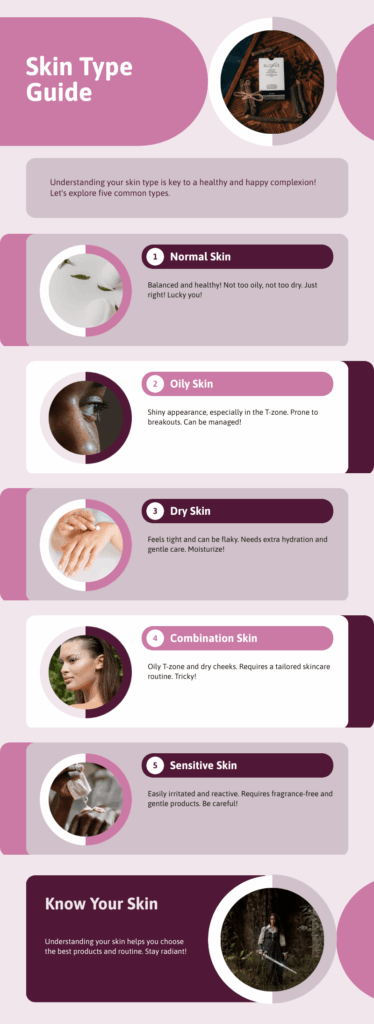
Understand Your Skin Type To Personalize Your Skincare Routine Guide

Normal Skin –

Normal skin has balanced oil and moisture levels, giving it a smooth, even tone. It’s rarely too dry or oily, with only occasional breakouts or dryness.

Oily Skin –

Oily skin produces excess sebum, often resulting in a shiny, greasy look. It has an increased likelihood of frequent breakouts, especially in the T-zone area.

Dry Skin –

Dry skin lacks adequate moisture, often feeling tight, rough, or itchy. It may show signs like flaking, cracking, and is more prone to irritation and sensitivity.

Combination Skin –

Combination skin features both oily and dry zones—usually an oily T-zone and normal to dry cheeks. The challenge lies in balancing care.

Sensitive Skin –

Sensitive skin reacts easily to triggers, often showing redness, itching, burning, or dryness. You find your skin on edge always? Learn how to spot the signs of sensitive skin and care for it the right way.

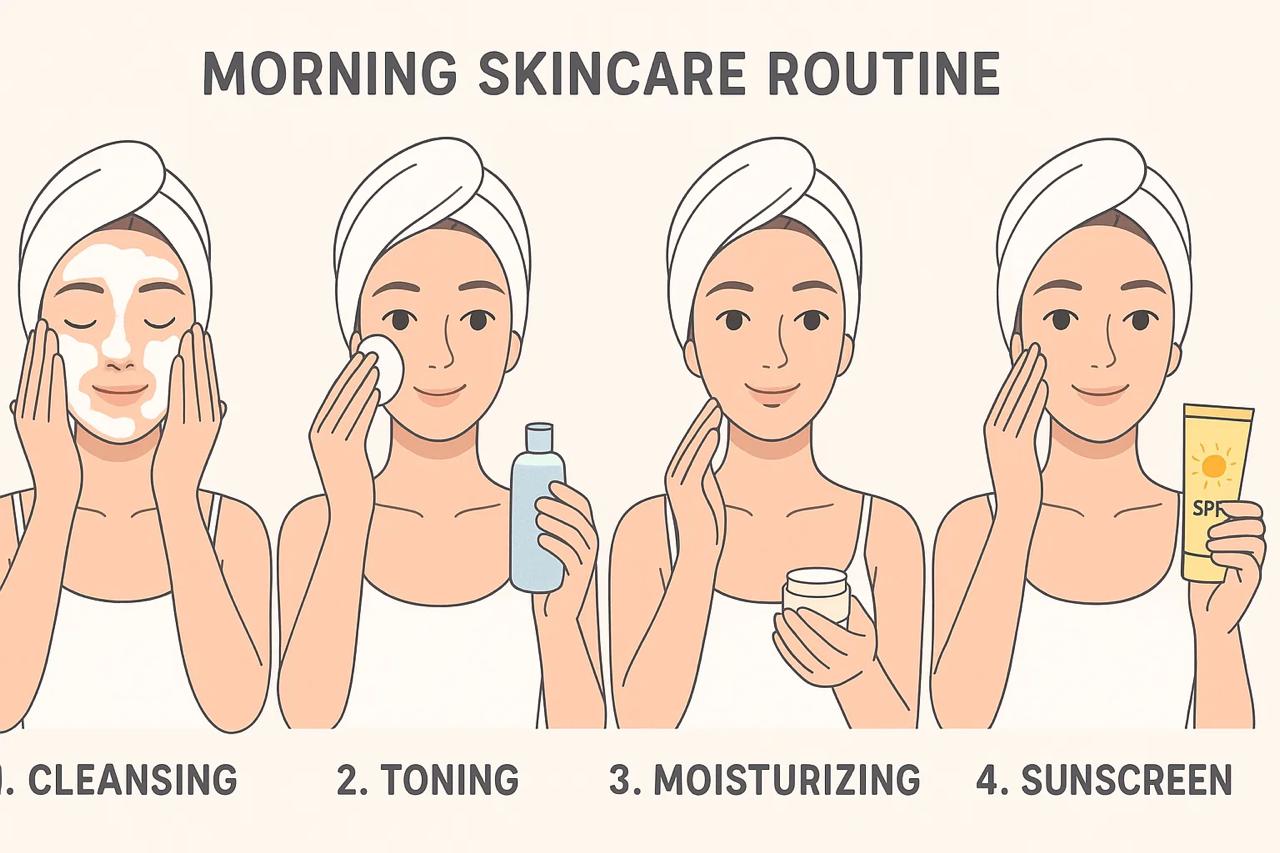
Morning Skincare Routine Guide

It is very important to start your day by caring for your skin as your skin tends to accumulate oil, sweat and dirt over the night. You need to protect your skin from dirt, UV rays and pollution. Morning skincare routine with sunscreen becomes a non-negotiable norm everyday. So your AM Glow-Up Starts here!

Water-based Cleanser

In the morning, use a water-based cleanser. This would remove all the dirt, oil and dead skin cells that got accumulated over the night preventing clogged pores.

Toner

Apply a toner that suits your skin type. It helps to balance your skin’s pH levels. The toner preps your skin so that other products get absorbed beautifully.

Serum

A serum is a more concentrated treatment that we do on our skin due to any specific issue or to enhance your overall skin health. You can use different types of gentle acids in your serum together or separately to get benefits.

Moisturizer

Now comes the moisturizer that provides more hydration and locks everything in to protect and prep the skin for the whole day. With the right type of skincare products, you will get glowing and healthy skin.

Sunscreen

Sunscreen is extremely important. This is the last step in your morning skincare routine. Lather your sunscreen on your skin to protect it from harmful UV rays, preventing premature aging, wrinkles and even skin cancer.

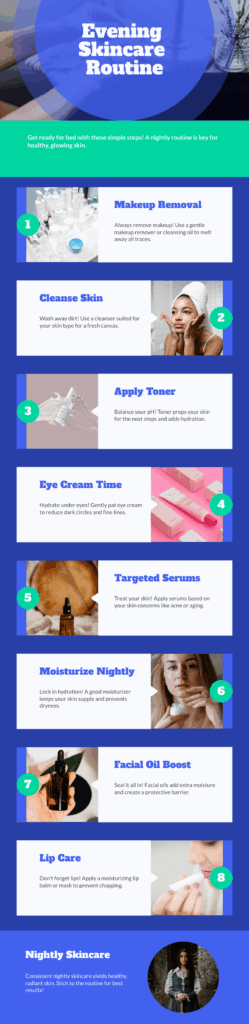
Evening Skincare Routine Guide

A proper evening skincare routine takes away, the whole day long, makeup, oil, impurities, sweat and dirt accumulation from our skin. While many rely on traditional creams, some experts suggest re-evaluating daily habits and considering if it’s time to stop using moisturiser on your face to allow your skin’s natural hydration mechanisms to function optimally. Supporting your skin’s innate ability to maintain moisture can lead to long-term benefits.

Follow these steps of your skincare routine guide and wind down with the perfect bedtime beauty skincare ritual to have healthy and well-nourished skin –

Skincare Routine Guide

Double Cleansing

In the evening skincare routine, double cleansing is the key to achieve a squeaky clean face guaranteeing an improved texture. First you use an oil or balm cleanser, massage on the face and then rinse it off. Next step is to use a water-based cleanser to clean your face.

Chemical Exfoliant

Exfoliation is an important step in the skincare routine but not everyday. Try to use chemical exfoliant twice a week. Chemical exfoliation removes dead skin cells and helps in opening up pores. Know the smooth skin secrets with this exfoliation guide.

Hydrating Toner

Lather your skin with layers of hydrating toner after cleansing your face. It helps in balancing the pH levels of the skin and also provides hydration.

Eye Cream

Using an eye cream is the most important step in your evening skincare routine. A good eye cream with retinal effectively repairs damaged skin around your eyes, preventing puffiness and reducing dark circles.

Treatment Serums

Now is the time to apply your treatment serums. You can use different types of acids to treat your issues like acne, hyper pigmentation, dry flaky patches, redness and acne scars. Follow the golden rule: from thin to thick — discover the correct way to layer skincare and use water-based ones before oil-based serums.

Moisturizer

Last but not the least is the moisturizer. Apply it on your face to lock all the moisture, helping it to enhance skin health.

Lip Care

Always before going to bed, apply a good amount of lip balm to wake up to soft, supple and juicy lips.

Choosing the Right Skincare Products for Your Personalized Skincare Routine Guide

Choosing the right type of skincare products along with the right ingredients is very much essential. You need to remember that your skin type varies from others so it would not be safe to hop on trends on social media on generic products.

Proper research is needed and here we will share proper skincare tips to guide you through. Welcome to the curated skincare routine guide to the best skincare components for healthy skin.

Cleansers –

All types of cleansers are suitable for normal skin types. Foam and gel cleansers are best suited for oily skin types. Creamy cleansers are best suited for dry skin types. Clay cleansers work best on combination skin types. Cleansing oils and balms suit best on dry and sensitive skin types. Crack the cleansing formula — discover how to select the ideal cleanser for your skin type.

Toners –

Hydrating toners are exceptionally suitable for dry skin types. For oily and combination skin types, try to use toners with salicylic acid. Calming Toners with chamomile and aloe vera without any alcohol is best suited for sensitive skin types.

Chemical Exfoliants –

Chemical exfoliants having salicylic acid, which is a BHA, are best for oily and combination skin types. AHAs like glycolic acid and lactic acid are suitable for dry and sensitive skin types. For anyone who gets treatments done by professionals, Luxury Facials in Beverly Hills will have a dedicated staff that can assess the type of skin you have and select specific products to match when they perform treatments.

Treatment Serums –

You need to use serums as per your skin types and challenges that you face. Serums are key in the treatment phase — learn how they work and why your skin needs them.

  • Use hyaluronic acid, glycerin and aloe vera for dry skin types.
  • You can use salicylic acid and niacinamide serums for oily skin.
  • Gel based serums with niacinamide and hyaluronic acid suit combination skin types the most.
  • Aloe vera, chamomile extract, green tea extracts work best on sensitive skin types.
  • You can use retinol and peptides to prevent wrinkles and aging.
  • Use kojic acid, vitamin c or alpha arbutin serum to reduce dark spots.

Moisturizer

  • It is better to choose thick, rich and creamy moisturizers for dry skin types.
  • You need to choose gel based moisturizers or lotion for oily skin types without being greasy and sticky.
  • It is better to choose a moisturizer made for combination skin types in order to avoid using too many skincare products for healthy skin.
  • For sensitive skin types, always opt for alcohol, fragrance free ones which are more calming and soothing.
  • Choose a balanced moisturizer for normal skin types.

Sunscreen

Your sunscreen should be PA++++ and have SPF 30 and above. In any skincare routine, SPF is Non-Negotiable — here is how to use it right, every day.

  • Choose a mineral sunscreen which has zinc oxide and titanium dioxide for sensitive skin types.
  • For combination and oily skin types, go for light-weight gel or lotion sunscreen.
  • Choose rich and hydrating cream-based sunscreen for dry skin types.

Skincare Tips for Long Term Results

  • Use clay masks or peel off masks twice a week and sheet masks thrice a week to get clear and hydrated skin.
  • Always do double cleansing in your evening skincare routine.
  • Do not skip using sunscreen in your morning skincare routine.
  • Keep applying your sunscreen every 2 to 3 hours for optimal results.
  • Most importantly drink water, maintain a good balanced food diet and sleep 8 – 9 hours to have healthy and glowing skin.
  • Always patch test any new products before using.

Final Thoughts

There is no particular formula of getting healthy and glowing skin in a fortnight. You have to follow this skincare routine guide religiously for over a month to see noticeable results. And once you do, there is no looking back!

Ready to transform your skincare game? Got questions or want product recommendations?  Drop a comment below, we will reach out to you to help you in this journey of healthy and glowing skin.

Pin It